
 CUSTOM OPTICAL FILTERS
 OPTICAL WINDOWS
 OPTICAL COATINGS
 UV OPTICS
 CYLINDRICAL OPTICS
 CUSTOM TEMPERED OPTICS
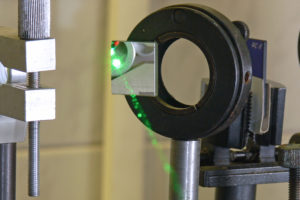 OPTICAL MIRRORS
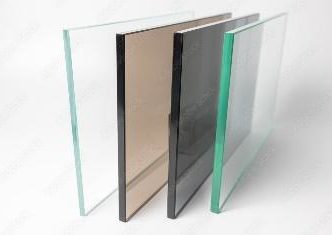 NEUTRAL DENSITY
 PRISMS & RETROREFLECTORS
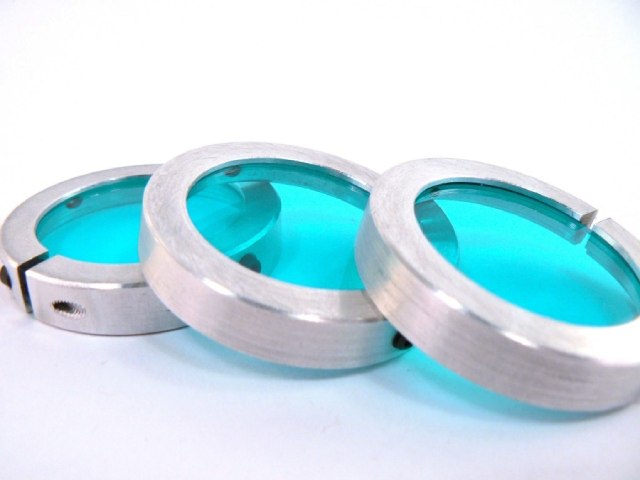 ASSEMBLIES
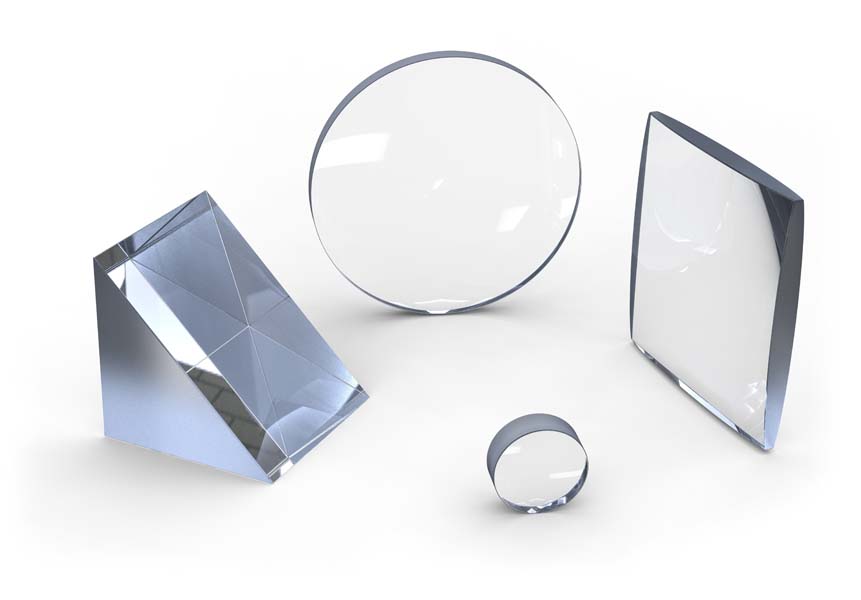 OPTICAL LENSES
 NIGHT VISION FILTERS
 ACHROMATIC LENSES
 OPTICAL BEAM SPLITTERS
How Are Optical Windows Manufactured? A Look at Precision Optical Window Manufacturing
Created at : Sep 09 2026
Optical windows may look like relatively simple components. In many cases, they are flat, transparent pieces of glass or another optical material positioned between a sensitive optical system and the outside environment. Their job, however, is anything but simple.
A precision optical window must allow selected wavelengths of light to pass through while introducing as little distortion, reflection, scattering, or beam deviation as possible. At the same time, the window may need to protect expensive optical components from dust, moisture, pressure, chemicals, temperature changes, or physical damage.
Producing a component capable of doing all of this requires considerably more precision than cutting a piece of ordinary glass.
Optical window manufacturing involves careful material selection, cutting, grinding, lapping, polishing, edge finishing, coating, and inspection. Each manufacturing step can influence the performance of the finished optic.
For applications requiring custom optical components, understanding how optical windows are manufactured can also help engineers make better decisions about materials, tolerances, coatings, and specifications.
What Is an Optical Window?
An optical window is a transparent component used to separate two environments while transmitting light through an optical system. Unlike lenses, optical windows generally are not intended to focus or magnify light.
Instead, their primary optical purpose is to transmit light without significantly changing it.
That distinction is important. A window that appears perfectly transparent to the human eye can still introduce optical errors that interfere with a precision imaging, sensing, laser, or measurement system.
Optical windows are found in applications ranging from industrial equipment and scientific instruments to aerospace, defense, imaging, sensors, lasers, and other sophisticated optical systems.
In many of these applications, the window serves as the first line of protection for the components located behind it.
Optical Window Manufacturing Begins With the Right Material
One of the first decisions in manufacturing an optical window is selecting the substrate material.
There is no single material that is ideal for every optical application. Engineers must consider the wavelengths that need to pass through the window as well as the environmental and mechanical conditions the component will experience.
Common materials can include optical glasses, fused silica, sapphire, and other specialty optical substrates.
Important considerations can include transmission range, thermal stability, mechanical strength, chemical resistance, thermal expansion, environmental durability, and cost.
A window designed for a visible imaging application, for example, may have very different requirements from an optic used in an infrared system or an environment involving significant temperature changes.
Material selection establishes the foundation for everything that follows. Even exceptionally precise manufacturing cannot compensate for a substrate that is poorly matched to the intended wavelength or operating conditions.
Creating the Optical Window Blank
Once the material has been selected, the manufacturer creates a blank that will eventually become the finished optical window.
Raw optical material is generally cut slightly larger and thicker than the final dimensions so that material can be removed during subsequent manufacturing processes.
Optical windows do not necessarily have to be simple round pieces of glass. Depending on the system, they may be circular, square, rectangular, or produced in specialized shapes.
Custom optical windows can also incorporate features such as bevels, chamfers, notches, holes, or specialized edge configurations.
This ability to manufacture optics according to application-specific drawings can be particularly valuable when the window must fit into an existing housing, instrument, or optical assembly.
Grinding Establishes the Window's Geometry
After the blank has been prepared, grinding processes begin establishing the component's dimensions and optical geometry.
Material is carefully removed until the window approaches its specified thickness and shape.
This stage also begins establishing an extremely important relationship between the two optical surfaces: parallelism.
For many applications, the front and back surfaces of an optical window must be highly parallel. If those surfaces are angled relative to one another, the window develops wedge.
Why does that matter?
A wedged window can behave somewhat like a very weak prism. Instead of allowing a beam to travel through the component along the expected path, excessive wedge can cause beam deviation.
For an ordinary protective viewing panel, a tiny amount of deviation may be insignificant. In a precision optical system, however, it can affect alignment or measurement accuracy.
Controlling thickness, flatness, parallelism, and wedge is therefore an important part of precision optical window manufacturing.
Fine Grinding and Lapping Prepare the Optical Surfaces
Initial grinding can efficiently remove material, but it does not create a finished optical surface.
The component consequently moves through progressively finer grinding or lapping operations. Finer abrasives remove irregularities and subsurface damage left by previous manufacturing steps while bringing the optic closer to its final dimensional requirements.
Think of the process as gradually refining the surface.
Each stage removes evidence of the stage before it until the window is ready for precision polishing.
Throughout these operations, dimensions and geometry must remain carefully controlled. Manufacturers may continually evaluate characteristics such as thickness and parallelism to ensure that additional material removal does not push the component outside its required tolerances.
Precision Polishing Creates an Optical-Quality Surface
Polishing is one of the most important stages in manufacturing high-quality optical windows.
A surface can feel perfectly smooth and still be nowhere close to optical quality. Precision optics require control at a much smaller scale.
During optical polishing, increasingly fine surface imperfections are removed until the component reaches the specified surface quality and flatness.
Both characteristics can influence optical performance.
Surface defects such as scratches and pits can scatter light. Surface irregularities can alter the transmitted wavefront. Either condition may negatively affect the performance of a demanding optical system.
The necessary polishing specification therefore depends on how the window will be used.
A window protecting an industrial viewing system may not require the same specifications as a component used in a laser, high-resolution imaging system, aerospace instrument, or precision optical assembly.
This is one reason specifying an optical window correctly is so important. Tighter tolerances can increase manufacturing complexity and cost, so specifications should reflect the actual requirements of the application.
Edge Finishing Protects the Component
Although most attention naturally goes to the optical surfaces, the edges of a precision optical window matter too.
Depending on the design, edges can be ground, smoothed, beveled, chamfered, or otherwise finished according to the customer's drawing.
Edge finishing can make an optical component easier and safer to handle while helping reduce the possibility of chipping. Proper edge geometry may also be necessary for installation into a mechanical mount, housing, or larger optical assembly.
For custom optical components, these mechanical requirements can be just as important as the optical specifications.
Optical Coatings Can Improve Window Performance
A polished optical window may also receive one or more custom optical coatings.
When light encounters the boundary between air and an optical substrate, some of that light can be reflected rather than transmitted. In applications where maximizing transmission is important, those reflections can become undesirable.
Anti-reflective coatings can be applied to reduce reflection and increase useful transmission over specified wavelengths or wavelength ranges.
But anti-reflective coatings are only one possibility.
Depending on the application, optical coatings can be engineered to provide specific transmission and reflection characteristics, improve environmental durability, or perform filtering functions.
This means the coating should be considered during the design of the optical window rather than simply treated as an optional finishing step.
Substrate material, wavelength range, angle of incidence, operating environment, and desired optical performance can all influence coating selection.
Inspecting Precision Optical Windows
Manufacturing isn't complete simply because the window looks clear.
Precision optical components must be inspected against their required specifications.
Depending on the application and customer drawing, inspection can involve dimensional measurements as well as evaluations of optical characteristics such as surface quality, surface flatness, parallelism, wedge, and transmitted wavefront performance.
Coated windows may also require verification that the coating provides the intended optical characteristics.
This inspection process is critical because many defects affecting optical performance cannot be identified simply by holding the component up to a light.
A precision optical window must perform correctly within the optical system, not merely look good.
Why Flatness Matters in an Optical Window
Surface flatness describes how closely the optical surface conforms to an ideal plane.
For precision optical systems, seemingly microscopic deviations can matter.
If an optical window has inadequate flatness, light passing through it can experience wavefront distortion. Depending on the system, this distortion may affect imaging quality, measurement accuracy, beam quality, or overall optical performance.
Manufacturers therefore need to achieve a level of flatness appropriate for the application while maintaining the other dimensional and surface requirements of the component.
Why Parallelism and Wedge Matter
The relationship between the two surfaces is equally important.
Ideally, many optical windows require their opposing surfaces to remain extremely close to parallel. When one surface sits at an angle relative to the other, the difference creates wedge.
Controlled wedge can sometimes be deliberately incorporated into an optical design. In other situations, excessive wedge is undesirable because it can cause beam deviation.
For this reason, specifying and controlling wedge or parallelism is an important consideration when producing custom optical windows for precision applications.
Surface Quality Can Affect the Entire Optical System
Scratches, pits, and other surface imperfections aren't simply cosmetic concerns.
When light interacts with these imperfections, some of it can scatter rather than continue along its intended path. In demanding applications, scattered light can reduce contrast, create unwanted background signals, or interfere with system performance.
Surface-quality requirements therefore need to be matched to the optical application.
Precision optical manufacturers combine carefully controlled grinding and polishing processes with inspection procedures designed to produce surfaces capable of meeting these requirements.
Custom Optical Windows Require More Than Glass Cutting
The difference between an ordinary transparent panel and a precision optical window becomes clear when the entire manufacturing process is considered.
Producing a high-performance window can require control over material properties, dimensions, thickness, parallelism, wedge, surface flatness, surface quality, edge geometry, coatings, and transmitted optical performance.
Each characteristic interacts with the others.
That makes experienced optical manufacturing especially valuable for custom applications. Rather than simply producing a component to nominal dimensions, an optical manufacturer must understand how manufacturing decisions influence the performance of the finished optic.
Precision Optical Window Manufacturing From Sterling Precision Optics
When an optical window is protecting a sensitive system, its performance matters just as much as the components behind it.
Sterling Precision Optics provides precision optical manufacturing capabilities for customers requiring custom optical windows and other precision optical components. By combining optical fabrication experience with tightly controlled manufacturing and inspection processes, Sterling Precision Optics can manufacture components designed around demanding optical and mechanical requirements.
Whether an application requires a straightforward protective window or a custom optic involving challenging tolerances, specialized geometry, or optical coatings, working with an experienced optical manufacturer helps ensure that the finished component performs as intended.
A precision optical window may appear simple when viewed by itself. In reality, it is the product of carefully controlled material selection, grinding, polishing, finishing, coating, and inspection.
And when that window becomes part of a sophisticated optical system, every one of those manufacturing steps can make a difference.