
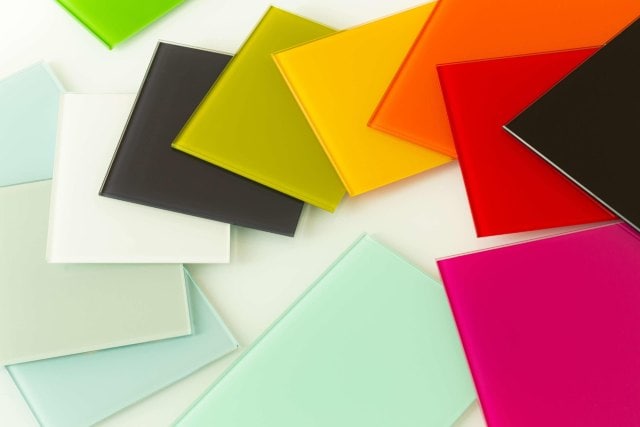
 CUSTOM OPTICAL FILTERS
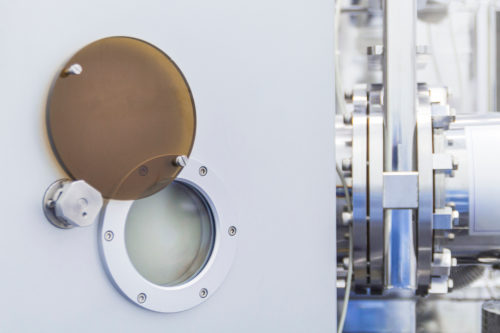 OPTICAL WINDOWS
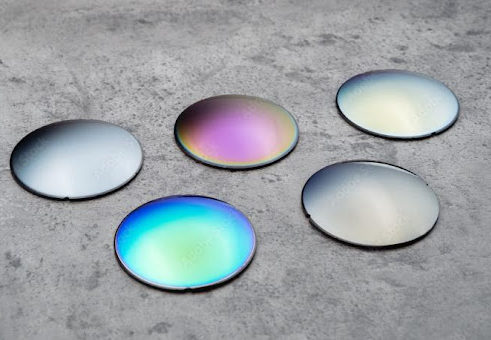 OPTICAL COATINGS
 UV OPTICS
 CYLINDRICAL OPTICS
 CUSTOM TEMPERED OPTICS
 OPTICAL MIRRORS
 NEUTRAL DENSITY
 PRISMS & RETROREFLECTORS
 ASSEMBLIES
 OPTICAL LENSES
 NIGHT VISION FILTERS
 ACHROMATIC LENSES
 OPTICAL BEAM SPLITTERS
Tempered Optics: When Optical Performance Has to Survive the Real World
Created at : Sep 28 2026
Optical components are often specified according to what they need to transmit, reflect, filter or protect. But in demanding applications, optical performance is only part of the equation. The component may also need to withstand impact, vibration, temperature changes, repeated handling and challenging operating environments without cracking or failing.
That is where tempered optics can provide an important advantage.
Tempering and other glass-strengthening processes are used to increase the mechanical durability of glass while retaining the optical characteristics required for the application. For optical windows, protective covers and other exposed optical components, strengthening the substrate can help engineers achieve a better balance between optical performance and real-world durability.
What Are Tempered Optics?
Tempered optics are glass optical components that have undergone a strengthening process designed to create compressive stress at the surface of the glass.
This is important because glass is particularly vulnerable to flaws and microscopic cracks at its surface. When tensile stress acts on those imperfections, cracks can propagate and ultimately cause the component to fail. Introducing residual compression at the surface makes it more difficult for those flaws to open and grow.
For optical applications, however, strengthening glass isn't simply a matter of making it harder to break. The process must be selected and controlled with optical quality in mind.
The finished component may still need to meet requirements for transmitted wavefront, surface quality, dimensional accuracy, parallelism, spectral transmission or coating performance.
That makes tempered optics considerably more specialized than ordinary tempered safety glass.
Thermal Tempering vs. Chemical Strengthening
There are two primary approaches to strengthening glass: thermal tempering and chemical strengthening. Both create beneficial compressive stress at the surface, but they accomplish it differently.
With thermal tempering, the glass is heated and then rapidly cooled. The surfaces cool faster than the interior, creating a stress profile in which the outer portions of the glass are placed in compression while the interior is placed in tension.
This can significantly improve mechanical strength and resistance to thermal shock. However, thermal tempering has limitations when applied to precision optical components. The heating and rapid cooling process can introduce distortion, and achieving uniform tempering becomes more difficult with thin glass, unusual geometries or components requiring extremely tight optical tolerances.
Chemical strengthening uses a different approach.
In a common ion-exchange process, glass is placed in a molten salt bath. Smaller alkali ions near the surface of the glass are exchanged for larger ions, creating a highly compressed surface layer. The process can produce significantly greater surface compressive stress than conventional thermal tempering.
Because chemical strengthening does not depend on creating a large temperature gradient through the thickness of the component, it can also be advantageous for thinner glass and certain optical applications where conventional thermal tempering would be impractical.
Why Tempering Can Matter in Optical Applications
Consider an optical window protecting a sensor.
The window may have excellent transmission characteristics and precisely manufactured surfaces, but it is also the first component exposed to the outside environment. If the system is installed in aerospace equipment, industrial instrumentation, defense hardware or outdoor sensing equipment, that window may encounter vibration, debris, mechanical loads and abrupt temperature changes.
A failure doesn't simply mean replacing a piece of glass. It can expose expensive electronics, detectors or other sensitive optical components behind it.
Strengthening the optical window can therefore become part of the overall system-protection strategy.
This is one reason tempered or chemically strengthened glass can be valuable for protective optical windows, display covers, viewing windows, sensor covers and other exposed optical components.
The Challenge: Strength Without Sacrificing Optical Quality
For ordinary safety glass, the primary goal of tempering may be mechanical strength and predictable fracture behavior.
Precision optics introduce another set of requirements.
Heating, cooling and residual stresses can potentially affect optical properties. Stress within glass can create birefringence, for example, which may become important in systems involving polarized light. Polarized-light methods are actually used to measure the stress generated within strengthened glass.
Thermal processing can also introduce optical distortion. This is one reason strengthening processes that work perfectly well for architectural or automotive glass may not automatically be appropriate for a precision optical window.
The manufacturer must understand not only how strong the optic needs to be, but also how the strengthening process interacts with the optical requirements of the system.
Manufacturing Sequence Matters
One of the most important considerations with tempered optics is determining when strengthening occurs within the manufacturing process.
In general, the major cutting, shaping and finishing operations must be completed before thermal tempering. Attempting significant machining after the glass has been tempered can disrupt the carefully established stress distribution and may cause the component to fracture.
That places additional importance on precision manufacturing before the strengthening step.
Dimensions, edges, holes, surface geometry and other features need to be established correctly before the component reaches the tempering stage. Depending on the optic and strengthening method, subsequent coating requirements also need to be considered when establishing the manufacturing sequence.
For a custom optic, tempering should therefore be considered during the design and process-planning stages—not treated as an afterthought.
Tempered Optical Windows for Demanding Environments
Optical windows are an especially natural application for strengthened glass because their purpose is often twofold: allow light to pass through the system while physically protecting what is behind them.
A properly engineered window may need to deliver high transmission within a specified wavelength range while also providing resistance to mechanical and environmental stresses.
Depending on the application, additional optical coatings can be incorporated to further tailor performance. Anti-reflective coatings can improve transmission and reduce unwanted reflections, while other coating designs may be used to control specific portions of the spectrum.
The result is an optical component engineered around the complete operating environment rather than transmission alone.
Is Tempering Right for Every Optic?
No—and that is an important distinction.
Some applications benefit substantially from strengthened glass, while others place such demanding requirements on wavefront quality, polarization performance, substrate material or geometry that another solution may be more appropriate.
Glass composition also matters. Chemical strengthening relies on ion exchange, which means the composition of the glass strongly influences how effectively the process can be performed. Aluminosilicate glasses, for example, can respond particularly well to chemical strengthening, while some low-alkali glasses are less suitable.
Thickness, geometry, edge configuration, operating temperature and expected mechanical loads can all affect the decision.
Instead of simply specifying "tempered glass," engineers should evaluate the strengthening requirement alongside the optic's complete performance specification.
Designing Custom Tempered Optics
For a custom optical component, several requirements should be established early in the design process: substrate material, component thickness and geometry, surface quality, dimensional tolerances, optical performance, anticipated mechanical loads, environmental conditions, strengthening method and any required optical coatings.
These factors are interconnected.
A design optimized solely for optical performance may not provide sufficient durability. A component optimized solely for mechanical strength may introduce unnecessary optical compromises.
The goal is to identify the appropriate combination of material, optical fabrication, strengthening and coating processes for the actual application.
Stronger Optics Start With Better Process Planning
Tempered optics demonstrate an important principle of precision optical manufacturing: the best optical component isn't necessarily the one with the most impressive specification on paper. It is the component that continues to perform once it is installed in the real system.
For optical windows and other components exposed to demanding conditions, strengthening the glass can add another level of durability and reliability. But successful tempered optics require more than putting finished glass through a generic tempering process.
They require careful control of the entire manufacturing sequence.
Sterling Precision Optics works with customers to manufacture custom optical components for demanding applications. By considering substrate selection, geometry, optical tolerances, coatings and environmental requirements together, Sterling can help customers develop optics designed not only to deliver the required optical performance, but to withstand the conditions they will encounter in service.