
 CUSTOM OPTICAL FILTERS
 OPTICAL WINDOWS
 OPTICAL COATINGS
 UV OPTICS
 CYLINDRICAL OPTICS
 CUSTOM TEMPERED OPTICS
 OPTICAL MIRRORS
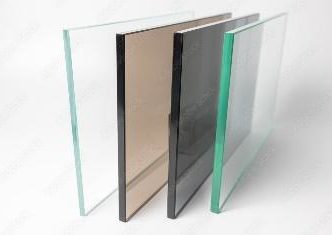 NEUTRAL DENSITY
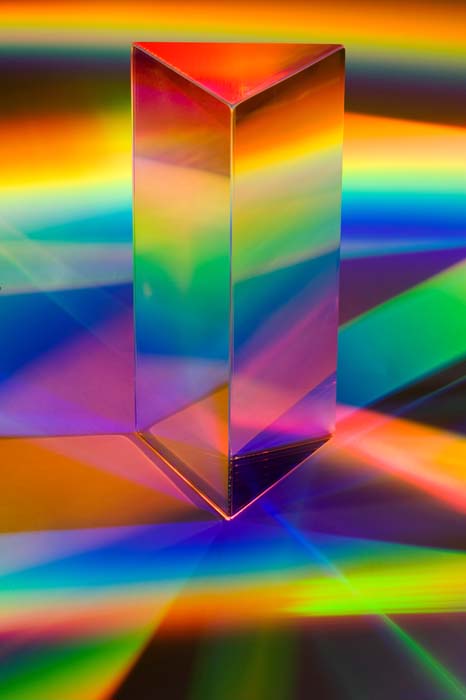 PRISMS & RETROREFLECTORS
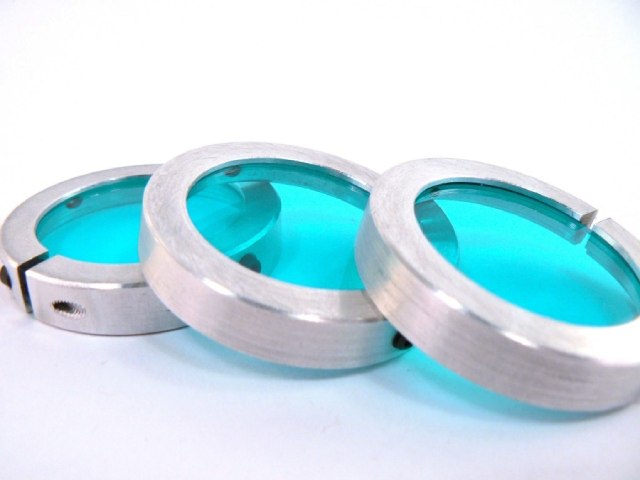 ASSEMBLIES
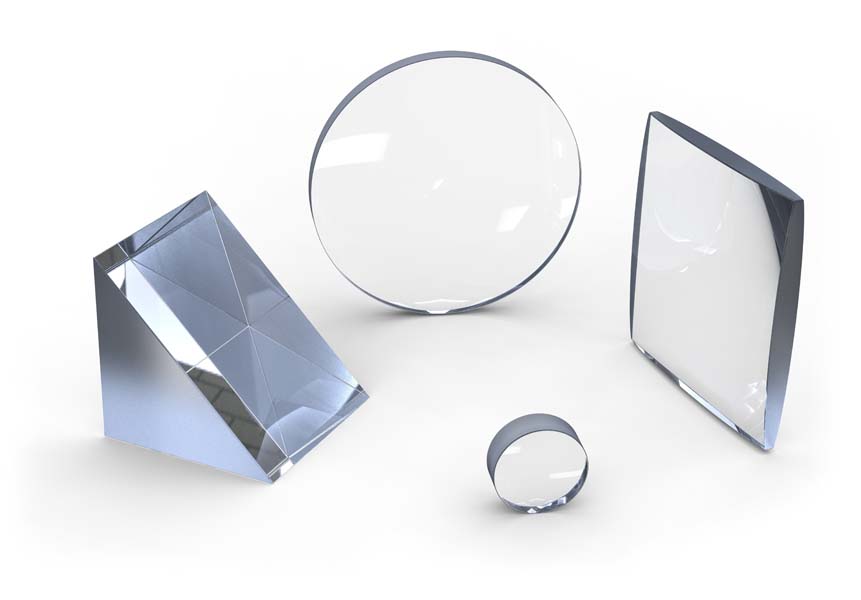 OPTICAL LENSES
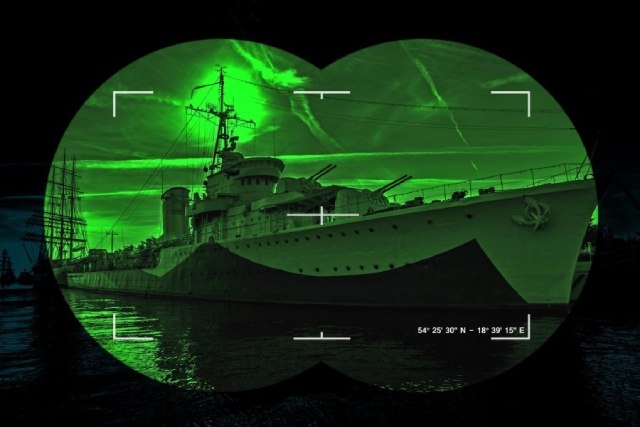 NIGHT VISION FILTERS
 ACHROMATIC LENSES
 OPTICAL BEAM SPLITTERS
When Every Wavelength Counts: The Science Behind Night Vision Filters
Created at : Oct 01 2026
When the sun goes down, visibility becomes a challenge. But for advanced optical systems, the ability to see in darkness involves far more than simply collecting available light. It requires precise control over which wavelengths of light reach an imaging sensor, how unwanted light is managed, and how optical components work together to produce usable images.
That's where night vision filters become an important part of optical system design.
From surveillance equipment and industrial inspection systems to scientific imaging and specialized navigation technologies, night vision filters help manage the light entering an optical system. By selectively transmitting or blocking specific wavelengths, these filters can improve contrast, reduce unwanted optical interference, and support more reliable imaging under challenging lighting conditions.
However, not all night vision technologies operate the same way, and the filters that work well in one application may be unsuitable for another.
Understanding the science behind night vision filters is essential for engineers, equipment manufacturers, and optical designers looking to optimize system performance.
Why Night Vision Is About More Than Seeing in the Dark
The human eye relies on visible light to distinguish objects, recognize shapes, and interpret our surroundings. As ambient light decreases, our ability to perceive color and fine details diminishes.
Night vision technologies overcome some of these limitations by using specialized sensors and optical components to capture information that would otherwise be difficult or impossible for the human eye to detect.
But capturing an image is only part of the challenge.
Consider a surveillance camera operating at night. The camera may successfully detect a person approaching a building, but if the image lacks sufficient contrast or detail, identifying clothing, facial features, or other distinguishing characteristics may be difficult.
Similarly, an industrial inspection system operating under low-light conditions may detect the presence of a component without capturing enough detail to identify surface irregularities or positioning errors.
In both situations, the challenge isn't necessarily a complete lack of light. It may involve how the available light is collected, filtered, and interpreted.
Night vision filters help address these challenges by controlling the spectral characteristics of the light reaching the imaging system.
When properly matched to the sensor and illumination conditions, optical filtering can improve the quality of the information captured.
How Night Vision Filters Control Light at the Wavelength Level
Light consists of electromagnetic radiation spanning a broad range of wavelengths. The human eye detects only a relatively narrow portion of this spectrum, generally between approximately 380 and 700 nanometers.
Many night vision systems, however, operate beyond the limits of human vision.
Digital night vision cameras may use near-infrared illumination, commonly around 850 or 940 nanometers. Thermal imaging systems detect longer-wavelength infrared radiation emitted by objects, often within the 3–5 micrometer or 8–14 micrometer spectral regions.
Each technology has different optical requirements.
Night vision filters are designed to manage these wavelengths through carefully controlled transmission and rejection characteristics.
For example, an optical bandpass filter may allow a narrow range of near-infrared wavelengths to pass through while blocking much of the surrounding visible and infrared spectrum.
A longpass filter, on the other hand, may transmit wavelengths above a specified cutoff while rejecting shorter wavelengths.
These characteristics allow optical engineers to tailor a system's response to the illumination source, detector sensitivity, and operating environment.
The result can be a more selective imaging system that captures the wavelengths most relevant to its intended purpose.
Why More Light Doesn't Always Mean Better Night Vision
It's easy to assume that the more light a night vision system collects, the better its image quality will be.
In practice, the relationship is more complicated.
While sufficient light is essential for many imaging technologies, unwanted wavelengths can interfere with image quality, particularly when the system relies on a specific illumination band.
Imagine a digital night vision camera designed to operate with an 850-nanometer infrared illuminator.
The camera's sensor may also respond to visible light and other near-infrared wavelengths. Depending on the environment, these additional wavelengths can introduce unwanted background signals or contribute to glare and reduced contrast.
A properly selected optical filter can help isolate the intended illumination band while reducing interference from competing wavelengths.
This can be particularly valuable in environments where artificial lighting, reflections, or changing ambient conditions affect image consistency.
However, filtering also introduces tradeoffs. Every filter has transmission losses, and excessive spectral restriction can reduce the number of useful photons reaching the detector.
The objective isn't to block as much light as possible.
The objective is to transmit the right light while minimizing wavelengths that interfere with the system's intended function.
This distinction is one of the most important considerations in designing effective night vision optical systems.
Different Night Vision Technologies Require Different Optical Filters
One of the most common misconceptions about night vision is that all systems use the same technology.
In reality, several distinct imaging methods fall under the general category of night vision, each with its own requirements for optical components.
Image Intensification Systems
Traditional image intensification technology amplifies available low levels of light to produce a visible image.
These systems commonly rely on visible and near-infrared light reflected from objects in the surrounding environment.
Depending on the equipment design, optical filters may be used to manage specific spectral bands, reduce unwanted illumination, or support specialized viewing conditions.
Because image intensification systems depend on collecting limited available light, filter transmission efficiency is especially important.
Digital Night Vision Systems
Digital night vision systems use electronic imaging sensors to capture and process low-light images.
Many digital systems incorporate near-infrared illumination to provide visibility in environments where little usable ambient light is available.
Optical filters can be especially useful in these applications because they help control the wavelengths reaching the sensor.
For example, a system using a narrowband infrared illumination source may benefit from a corresponding filter that preferentially transmits that wavelength range.
The filter must be selected with the sensor's spectral response, illumination source, and operating conditions in mind.
Thermal Imaging Systems
Thermal imaging operates differently from image intensification and conventional digital night vision.
Rather than relying primarily on reflected visible or near-infrared light, thermal cameras detect infrared radiation emitted by objects.
Because thermal imaging systems operate at much longer wavelengths, they require optical materials and coatings designed for those spectral regions.
Conventional visible-light optical glass is generally unsuitable for transmitting the long-wave infrared radiation used by many thermal cameras.
Specialized infrared-transmitting materials, such as germanium or certain chalcogenide glasses, may be used instead.
This distinction demonstrates why night vision filters cannot be treated as interchangeable components.
A filter suitable for a near-infrared camera may not transmit the wavelengths required by a thermal imaging system.
The Role of Optical Coatings in Night Vision Filter Performance
The effectiveness of a night vision filter depends heavily on its optical design and, in many applications, the coatings applied to its surfaces.
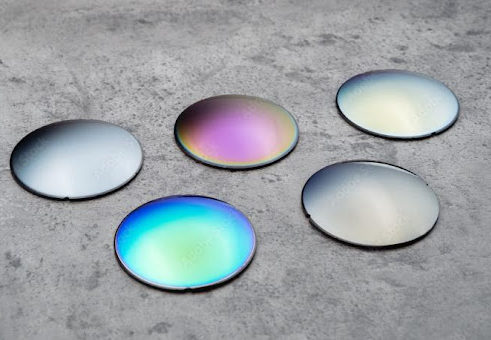
Precision optical coatings can be engineered to transmit selected wavelengths while reflecting or attenuating others.
Multilayer thin-film coatings achieve these characteristics through the interaction of light with carefully controlled layers of optical materials.
By adjusting the materials and thicknesses of individual layers, coating designers can create specific spectral transmission and reflection profiles.
For night vision applications, these profiles may be tailored to achieve several objectives, including high transmission within a desired infrared band, strong rejection of unwanted wavelengths, and reduced surface reflections.
But coating performance isn't determined by wavelength alone.
The angle at which light strikes the filter can also influence its spectral response. In interference filters, increasing the angle of incidence typically shifts the transmission band toward shorter wavelengths.
This becomes particularly important in wide-angle imaging systems or optical assemblies where light reaches the filter across a range of angles.
Environmental conditions also matter.
Night vision equipment may be exposed to temperature fluctuations, humidity, vibration, or demanding outdoor environments. Optical coatings must be designed and manufactured with the intended operating conditions in mind.
A filter that performs well in a controlled laboratory environment may not necessarily provide the same reliability in a rugged field application.
Why Custom Night Vision Filters Can Make a Difference
Off-the-shelf optical filters can be effective for many standard imaging applications.
However, specialized night vision systems often have requirements that standard components cannot fully accommodate.
An equipment manufacturer may need a filter with a particular cutoff wavelength, a narrow transmission band, or specific dimensions to fit within a compact optical assembly.
Another application may require unusually high transmission efficiency, enhanced environmental durability, or precise control over unwanted spectral leakage.
In these situations, custom night vision filters allow engineers to align optical characteristics more closely with the needs of the complete system.
Custom filter design may involve selecting an appropriate substrate, specifying coating characteristics, determining dimensional tolerances, and evaluating how the filter will interact with other optical components.
For example, a near-infrared imaging system may require a filter optimized around a particular illumination wavelength while maintaining strong rejection of ambient visible light.
A different system may require a broader transmission range to preserve sensitivity across varying low-light conditions.
Neither solution is inherently better.
The appropriate design depends on the detector, illumination conditions, optical geometry, and desired imaging performance.
By evaluating these requirements early in the development process, manufacturers can reduce the likelihood of integrating optical components that compromise system performance.
Precision Manufacturing: Where Optical Design Meets Real-World Performance
Even a well-designed night vision filter can fall short if manufacturing inconsistencies affect its optical properties.
Precision matters because small variations in substrate quality, surface characteristics, coating thickness, or component dimensions can influence how light travels through an optical system.
For filters used in demanding imaging applications, manufacturers may need to control several critical characteristics.
Surface quality can affect scattered light and image clarity. Scratches, digs, and other imperfections may introduce unwanted optical effects, particularly in sensitive imaging systems.
Surface flatness and transmitted wavefront quality can be important when filters are incorporated into precision optical assemblies. Distortion introduced by an optical component may affect the quality of the resulting image.
Coating uniformity helps maintain consistent spectral performance across the usable aperture of a filter.
Dimensional accuracy supports proper integration into optical housings, camera assemblies, and other equipment.
Equally important is the ability to verify that finished optical components meet their specified requirements.
Depending on the application, inspection and testing may include dimensional measurements, surface evaluations, and spectral transmission testing.
For OEMs developing sophisticated night vision equipment, consistent optical component quality helps reduce variability between manufactured systems.
Applications Where Night Vision Filters Matter
Night vision optical filtering supports a variety of industries and technologies where controlling light is essential.
In security and surveillance systems, near-infrared filters can help cameras operate with dedicated infrared illumination while reducing interference from unwanted spectral bands.
In industrial machine vision, wavelength-selective filtering can improve the consistency of imaging systems used to monitor equipment, inspect components, or identify objects under controlled lighting.
Scientific imaging systems may use specialized filters to isolate spectral information for research, observation, and measurement.
Transportation and navigation technologies may also incorporate low-light or infrared imaging systems where optical filtering contributes to sensor performance.
Across these applications, the underlying objective remains consistent: ensuring that the imaging sensor receives the spectral information necessary to perform its intended function.
The specific filter design, however, must reflect the requirements of the technology and operating environment.
Choosing the Right Night Vision Filter Starts with the Entire Optical System
One of the most important decisions in optical system development is determining filter requirements before finalizing the overall design.
Selecting a filter based solely on its advertised wavelength range can overlook factors that significantly affect performance.
Engineers should also consider the sensor's spectral sensitivity, the available illumination, the required field of view, the angle of incidence, and the environmental conditions in which the equipment will operate.
Transmission efficiency and out-of-band rejection must be balanced against the available light budget.
Mechanical considerations are equally important. Filter thickness, diameter, mounting requirements, and substrate characteristics can influence how easily the component integrates into the finished assembly.
Taking a system-level approach helps ensure that optical filtering supports the desired imaging performance rather than introducing unexpected limitations.
For manufacturers developing specialized equipment, collaborating with an experienced precision optics manufacturer can be an important part of translating design specifications into reliable optical components.
Sterling Precision: Supporting Precision Optical Manufacturing
At Sterling Precision, we understand that optical performance depends on more than the individual component. It depends on how precisely that component is manufactured and how effectively it supports the larger optical system.
From optical substrate considerations to dimensional requirements and application-specific performance specifications, precision manufacturing plays a critical role in the development of dependable optical components.
Whether you're developing a new low-light imaging system, refining an existing optical assembly, or evaluating custom optical filter requirements, understanding the relationship between wavelength control and manufacturing precision is an essential starting point.
When every wavelength counts, the right optical filter can make the difference between simply capturing light and capturing useful information.
Contact Sterling Precision to discuss your optical component requirements and explore how precision optical manufacturing can support your next project.