
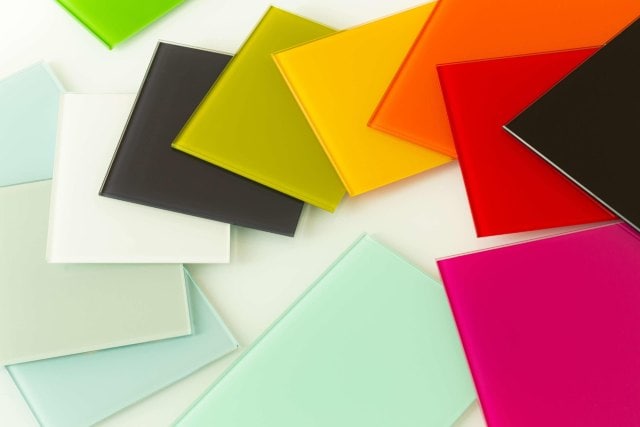
 CUSTOM OPTICAL FILTERS
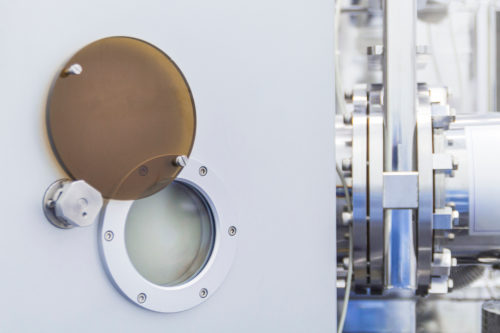 OPTICAL WINDOWS
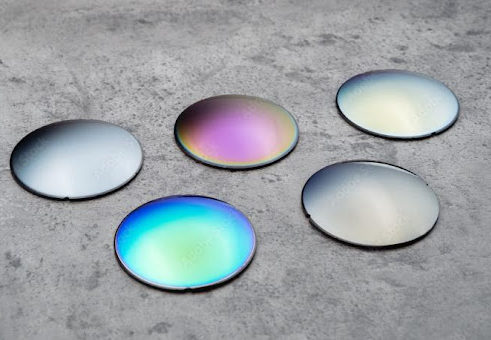 OPTICAL COATINGS
 UV OPTICS
 CYLINDRICAL OPTICS
 CUSTOM TEMPERED OPTICS
 OPTICAL MIRRORS
 NEUTRAL DENSITY
 PRISMS & RETROREFLECTORS
 ASSEMBLIES
 OPTICAL LENSES
 NIGHT VISION FILTERS
 ACHROMATIC LENSES
 OPTICAL BEAM SPLITTERS
When Optical Failure Isn't an Option: The Role of Tempered Optics in Equipment Reliability
Created at : Oct 23 2026
In a sophisticated optical system, one of the most expensive failures can begin with one of its simplest components: a piece of glass. Whether protecting sensitive sensors, providing a viewing window into industrial equipment, or transmitting light through a demanding environment, optical glass must do more than deliver clarity. It must withstand the conditions surrounding it. That's where properly specified tempered optics can make a meaningful difference.
For manufacturers and engineers working with sensitive optical systems, component reliability is essential. A cracked optical window, damaged protective lens, or compromised glass component can interrupt operations, affect measurement accuracy, and create unexpected maintenance expenses. By incorporating tempered optical glass where appropriate, manufacturers can improve durability without overlooking the optical performance their applications demand.
The Hidden Cost of Optical Component Failure
Optical components frequently serve as protective barriers between sensitive equipment and challenging operating environments. Although these components may represent a relatively small portion of an assembly's overall cost, their failure can have significant consequences.
Consider an industrial inspection system that relies on an optical window to protect internal cameras and sensors. If that window cracks or becomes damaged, the equipment may need to be shut down for inspection and replacement. Depending on the application, the failure could also expose sensitive electronics to contaminants or interfere with critical measurements.
Similar concerns arise in scientific instrumentation, manufacturing equipment, and optical monitoring systems. In these environments, component failure isn't simply a maintenance inconvenience. It can affect productivity, operational consistency, and equipment reliability.
Tempered optics offer an opportunity to reduce certain mechanical failure risks by providing increased strength compared to equivalent untreated glass, particularly when the material and tempering process are appropriate for the application.
Understanding Why Optical Glass Fails Under Stress
Optical glass is engineered to meet specific transmission, dimensional, and surface-quality requirements. However, even precisely manufactured components can be vulnerable to mechanical and environmental stresses.
Mechanical impacts, excessive pressure, improper mounting, and surface damage can contribute to cracking or breakage. Temperature changes introduce additional challenges, particularly when different portions of a glass component heat or cool at different rates.
These temperature differences can generate internal stresses. If the resulting tensile stress exceeds the strength of the material, the glass may fracture.
Surface imperfections can also influence durability. Small scratches, chips, or defects may create localized stress concentrations that increase the likelihood of failure under mechanical loading.
Understanding these potential failure mechanisms helps engineers determine whether tempered optical glass, an alternative substrate, or a different component design will provide the most reliable solution.
How Tempered Optics Improve Mechanical Durability
Tempering is a strengthening process designed to modify the stress distribution within glass. Depending on the material and manufacturing requirements, glass may be strengthened through thermal or chemical processes.
In conventional thermal tempering, compatible glass is heated and then cooled under controlled conditions. This process creates compressive stresses near the surfaces and balancing tensile stresses within the interior.
Because cracks generally propagate more readily under tensile stress, surface compression can help resist certain types of mechanical damage.
The resulting glass can provide greater resistance to bending stresses and mechanical impacts than comparable untreated glass. Thermal tempering can also improve resistance to some thermal-shock conditions.
Chemical strengthening uses a different approach, typically involving ion exchange at the glass surface. This method can be useful for certain glass compositions and component geometries, particularly when conventional thermal tempering is impractical.
However, not every optical glass is suitable for tempering, and strengthening does not eliminate the possibility of failure. The material composition, component thickness, edge condition, geometry, and operating environment all influence the final result.
For this reason, selecting tempered optics requires more than simply specifying stronger glass.
Where Tempered Optical Glass Can Make a Difference
The advantages of tempered optical glass become particularly relevant in applications where components face repeated handling, incidental impacts, or mechanical stresses during operation.
Industrial inspection systems are one example. Optical windows protect cameras and sensors from dust, debris, and contact with surrounding equipment while allowing light to pass through the system. In suitable applications, strengthened glass can help improve the durability of these protective barriers.
Manufacturing and process-monitoring equipment may also benefit from mechanically durable viewing windows. Depending on the operating conditions, these components must maintain visibility while tolerating vibration, routine cleaning, and occasional physical contact.
Scientific and analytical instruments present another consideration. Protective optical windows may need to combine reliable transmission characteristics with resistance to handling damage and environmental exposure.
Tempered optical components can also be considered for selected protective windows in imaging and sensing assemblies where mechanical durability is important.
In each case, the operating conditions determine whether tempering is beneficial. High temperatures, pressure differentials, chemical exposure, and demanding optical specifications may require specialized materials or alternative strengthening approaches.
Why Stronger Glass Isn't Always Better Optical Glass
One of the most important considerations in optical component design is that mechanical strength and optical precision are not interchangeable.
A component may offer excellent impact resistance but still be unsuitable for an application requiring extremely tight optical flatness, minimal wavefront distortion, or precise imaging performance.
Thermal tempering can introduce surface deformation, residual stress, and optical distortion. These effects may be acceptable for protective viewing windows but problematic for components used in high-precision imaging or measurement systems.
Residual stresses can also produce stress-induced birefringence, potentially affecting applications involving polarized light.
Additionally, the strengthening process must be compatible with the selected substrate, dimensional requirements, and any optical coatings.
For engineers specifying custom tempered optics, the goal should be to achieve the necessary durability while preserving the optical properties that are essential to system performance.
This may involve evaluating alternative materials, adjusting component thickness, improving edge finishing, or modifying mounting conditions rather than relying on tempering alone.
Designing Optical Components for Long-Term Reliability
Reliable optical performance begins well before a component is installed.
Material selection plays a fundamental role in determining how an optical window or protective component responds to mechanical loading and environmental conditions. Factors such as thermal expansion, transmission characteristics, chemical resistance, and mechanical properties must be considered together.
Component geometry is equally important. Thickness, diameter, edge configuration, and mounting arrangements can influence stress distribution and overall durability.
An optical window subjected to uneven clamping forces, for example, may experience damaging stresses even when manufactured from a relatively strong material.
Surface quality and edge finishing also deserve careful attention. Proper fabrication helps minimize defects that could compromise component strength or optical performance.
Finally, engineers must consider how the optical component interacts with the larger assembly. A properly specified glass substrate may still fail prematurely if the mounting system does not accommodate thermal expansion, vibration, or other operating stresses.
Taking a system-level approach to optical component design can help manufacturers avoid preventable failures and improve long-term equipment reliability.
The Importance of Working With an Experienced Optical Manufacturer
Selecting tempered optics involves balancing mechanical durability, optical performance, manufacturing feasibility, and application requirements.
For some applications, tempered glass may provide a practical solution. For others, precision-annealed optical glass, fused silica, or another specialized substrate may be more appropriate.
Working with an experienced optical manufacturer helps engineers evaluate these considerations before finalizing component specifications.
Sterling Precision Optics specializes in precision optical components, including custom optical windows, lenses, and filters manufactured to meet demanding application requirements. By emphasizing material selection, precision fabrication, and quality, Sterling Precision Optics helps customers identify optical solutions suited to their equipment and operating environments.
Rather than treating optical glass as a standard replacement part, manufacturers can benefit from evaluating its mechanical and optical requirements early in the design process.
Protecting Equipment Performance Starts With the Right Optics
When equipment reliability matters, every component deserves careful consideration, including the optical glass that protects sensitive systems and enables accurate performance.
Tempered optics can offer meaningful durability advantages in appropriately selected applications, helping reduce vulnerability to certain mechanical stresses and environmental challenges. However, successful optical component design requires balancing strength with transmission, surface quality, dimensional accuracy, and system compatibility.
The most reliable solution isn't necessarily the strongest glass available. It's the optical component engineered for the conditions it will actually encounter.
For manufacturers seeking precision optical components for demanding applications, Sterling Precision Optics provides the manufacturing expertise and attention to quality needed to support dependable optical system performance.
Contact Sterling Precision Optics to discuss your custom optical window, lens, or filter requirements and explore the materials and manufacturing options best suited to your application.