
 CUSTOM OPTICAL FILTERS
 OPTICAL WINDOWS
 OPTICAL COATINGS
 UV OPTICS
 CYLINDRICAL OPTICS
 CUSTOM TEMPERED OPTICS
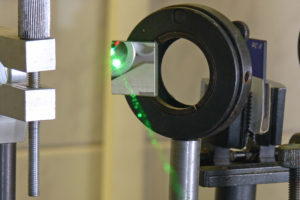 OPTICAL MIRRORS
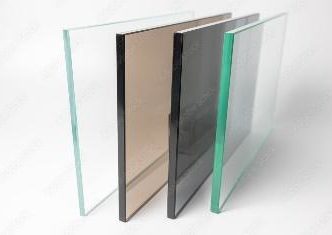 NEUTRAL DENSITY
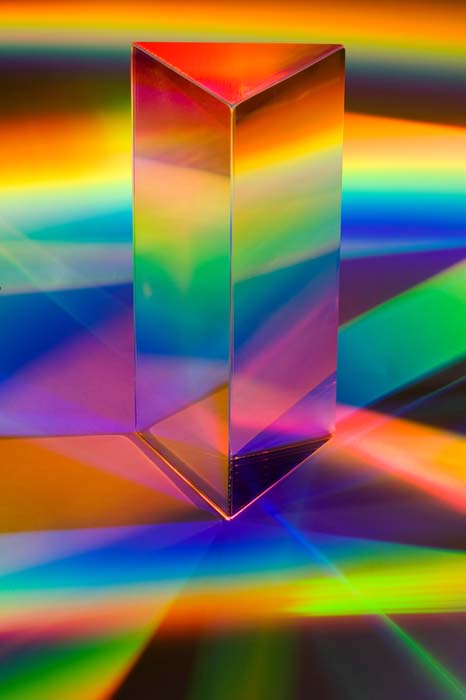 PRISMS & RETROREFLECTORS
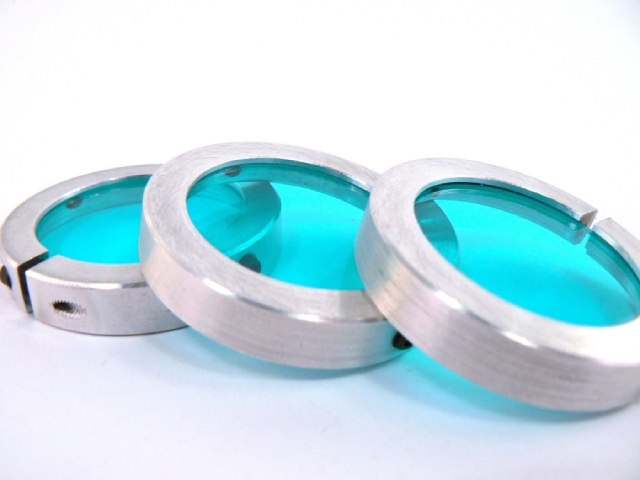 ASSEMBLIES
 OPTICAL LENSES
 NIGHT VISION FILTERS
 ACHROMATIC LENSES
 OPTICAL BEAM SPLITTERS
Aspheric Lenses: The Precision Optics Behind Sharper Images and Better Performance
Created at : Jul 15 2026
Whether you're taking a photo with your smartphone, performing laser surgery, guiding a satellite through orbit, or inspecting microscopic defects on a manufacturing line, chances are an aspheric lens is helping make it possible. While most people never think about the optical components hidden inside these technologies, engineers know that lens design can make the difference between ordinary performance and exceptional precision.
Aspheric lenses have transformed modern optics by solving one of the oldest challenges in lens design: producing crystal-clear images while keeping optical systems compact, lightweight, and efficient. For industries where accuracy is measured in microns and even the smallest optical distortion can affect results, these advanced lenses have become indispensable.
At Sterling Precision, custom-manufactured aspheric lenses are part of a broader portfolio of precision optical components designed to meet the demanding requirements of aerospace, defense, medical technology, scientific research, and industrial manufacturing.
What Is an Aspheric Lens?
Unlike traditional spherical lenses, which maintain the same curvature from center to edge, aspheric lenses feature a continuously changing surface profile. Rather than following the shape of a simple sphere, the curvature is mathematically engineered to direct incoming light with far greater precision.
This subtle design difference produces a dramatic improvement in optical performance.
A spherical lens naturally causes light rays entering near its edges to focus differently than those passing through the center. The result is an optical defect known as spherical aberration, which can reduce sharpness, introduce blur, and diminish image quality.
An aspheric lens is specifically designed to eliminate or greatly reduce these imperfections, allowing all incoming light rays to converge much more accurately at the desired focal point. The result is sharper images, greater contrast, and significantly improved optical performance across the entire field of view.
Why Aspheric Lenses Matter
For decades, optical designers compensated for spherical aberration by combining multiple spherical lenses into increasingly complex assemblies. While effective, these systems became larger, heavier, more expensive, and more difficult to manufacture.
Aspheric lenses changed that equation.
Because a single aspheric lens can often perform the work of several conventional lenses, engineers can simplify optical systems while improving performance at the same time. This reduction in component count leads to lighter designs, fewer alignment challenges, improved light transmission, and greater reliability.
Today, many of the world's most sophisticated optical systems depend on this ability to achieve exceptional image quality without unnecessary size or complexity.
Creating Sharper Images
Image quality is often the first benefit people notice when comparing optical systems that incorporate aspheric lenses.
Because these lenses correct spherical aberration directly, they produce images that remain crisp from the center of the image all the way to its outer edges. Details appear sharper, colors exhibit greater contrast, and fine features remain visible even under challenging lighting conditions.
This improvement is particularly valuable in applications where visual accuracy directly affects outcomes.
A medical imaging device must reveal tiny anatomical structures. A semiconductor inspection system must identify microscopic manufacturing defects. A military targeting system must distinguish distant objects under difficult environmental conditions. In each case, superior optics contribute directly to better performance and more reliable results.
Enabling Smaller and Lighter Optical Systems
Modern technology demands more capability from increasingly compact devices.
Consumers expect smartphone cameras that rival dedicated digital cameras. Engineers develop drones carrying sophisticated imaging payloads. Surgeons rely on minimally invasive instruments that must fit through extremely small openings.
Aspheric lenses make these advances possible.
Because fewer optical elements are needed to achieve excellent image quality, designers can reduce the size and weight of complete optical assemblies. This allows manufacturers to create products that are easier to carry, more energy efficient, and more practical without sacrificing optical performance.
The ability to simplify lens assemblies has become one of the primary reasons aspheric lenses are found throughout today's most advanced technologies.
Medical Devices Depend on Precision Optics
Healthcare is one of the industries where image quality can have life-changing consequences.
Medical professionals increasingly rely on sophisticated optical systems for diagnosis, treatment, and surgery. Aspheric lenses help these instruments produce bright, distortion-free images that allow physicians to make confident decisions.
Common medical applications include:
- Endoscopes
- Surgical microscopes
- Ophthalmic diagnostic equipment
- Dental imaging systems
- Optical coherence tomography (OCT)
- Laboratory instruments
Improved optical clarity helps physicians visualize delicate anatomical structures while reducing eye strain and improving diagnostic confidence.
Aerospace and Defense Applications
Few environments challenge optical systems as severely as aerospace and defense.
Military and aerospace optics must withstand vibration, temperature extremes, humidity, shock, and prolonged operation without sacrificing accuracy. Aspheric lenses help these systems maintain precise optical performance under demanding conditions.
They are commonly incorporated into:
- Night vision equipment
- Thermal imaging systems
- Laser targeting optics
- Missile guidance systems
- Satellite imaging payloads
- Surveillance systems
- Reconnaissance equipment
Sterling Precision manufactures optical components capable of supporting these demanding applications, where precision manufacturing and rigorous quality control are essential.
Improving Laser Performance
Lasers require exceptional optical precision.
Whether focusing energy onto a microscopic semiconductor wafer or transmitting information through fiber optic networks, laser systems depend on optics that minimize distortion and maximize efficiency.
Aspheric lenses are widely used to:
- Focus laser beams into extremely small spots
- Collimate divergent laser light
- Improve beam quality
- Reduce optical losses
- Increase overall system efficiency
Applications range from industrial cutting and welding to telecommunications, scientific research, and medical laser systems.
Industrial Automation and Machine Vision
Manufacturing continues to become smarter through automation and artificial intelligence, but every automated inspection system begins with high-quality imaging.
Machine vision systems equipped with aspheric lenses can inspect products at remarkable speeds while identifying defects that would be impossible for the human eye to detect consistently.
Industries using these optical systems include:
- Automotive manufacturing
- Electronics production
- Pharmaceutical packaging
- Food processing
- Aerospace manufacturing
- Precision machining
By delivering sharper images with reduced distortion, aspheric lenses improve inspection accuracy and support higher manufacturing quality standards.
Consumer Electronics You Use Every Day
One of the most remarkable aspects of aspheric lens technology is how commonplace it has become.
Millions of people carry multiple aspheric lenses in their pockets every day.
Modern smartphones use molded glass or precision polymer aspheric lenses to maximize image quality while fitting inside camera modules only a few millimeters thick. Digital cameras, augmented reality devices, virtual reality headsets, barcode scanners, and facial recognition systems all benefit from the same optical principles.
Consumers may never see these lenses, but they experience the results every time they capture a crisp photograph or unlock their phone with facial recognition.
Scientific Research and Astronomy
Scientific instruments demand extraordinary optical accuracy.
Astronomers searching for distant galaxies, researchers studying microscopic biological structures, and physicists measuring laser interactions all rely on optics that introduce as little distortion as possible.
Aspheric lenses help improve:
- Resolution
- Contrast
- Light collection efficiency
- Measurement accuracy
- Color correction
- Imaging consistency
Many advanced telescopes and laboratory instruments incorporate custom aspheric optics specifically engineered for their unique applications.
Manufacturing Aspheric Lenses Requires Extraordinary Precision
Although the benefits of aspheric lenses are significant, manufacturing them is considerably more challenging than producing traditional spherical optics.
The continuously changing surface geometry cannot be created using conventional polishing techniques alone. Instead, manufacturers employ sophisticated fabrication methods capable of achieving extremely tight tolerances.
These processes may include:
- Precision CNC grinding
- Diamond turning
- Computer-controlled polishing
- Magnetorheological finishing (MRF)
- High-precision interferometry
- Advanced optical metrology
Throughout production, every lens must be carefully measured to verify surface accuracy, radius, thickness, centration, and surface finish. Even microscopic deviations from the intended design can affect optical performance.
This combination of advanced manufacturing and meticulous inspection ensures the finished lens performs exactly as optical engineers intended.
Why Manufacturing Experience Matters
Designing an exceptional optical system is only half the challenge. Manufacturing each component with consistent precision is equally important.
High-performance optical assemblies require lenses that meet exact specifications every time. Variations measured in fractions of a micron can influence image quality, alignment, and overall system performance.
Sterling Precision has built its reputation by producing precision optical components that meet these demanding requirements. From custom lenses and prisms to mirrors, filters, windows, and specialty optics, the company's manufacturing expertise supports customers developing some of today's most advanced optical technologies.
Working closely with engineers throughout the manufacturing process, Sterling Precision helps ensure each component performs reliably within its intended optical system.
Precision Optics for Tomorrow's Innovations
As technologies continue to evolve, the demand for higher-performing optical systems will only increase. Autonomous vehicles, advanced medical imaging, quantum computing, space exploration, industrial automation, and next-generation defense systems all depend on optics capable of delivering exceptional accuracy in increasingly compact designs.
Aspheric lenses have become one of the most important innovations in modern optical engineering because they allow designers to improve image quality while simplifying entire optical systems. Their ability to reduce aberrations, enhance clarity, minimize component count, and increase efficiency makes them indispensable across countless industries.
For organizations developing advanced optical equipment, partnering with an experienced precision optics manufacturer is essential. Sterling Precision combines advanced manufacturing capabilities, rigorous quality standards, and decades of expertise to produce custom aspheric lenses and other precision optical components that help customers push the boundaries of optical performance.
When image quality, precision, and reliability are critical, aspheric lenses provide the optical foundation that allows today's most sophisticated technologies to perform at their best.