
 CUSTOM OPTICAL FILTERS
 OPTICAL WINDOWS
 OPTICAL COATINGS
 UV OPTICS
 CYLINDRICAL OPTICS
 CUSTOM TEMPERED OPTICS
 OPTICAL MIRRORS
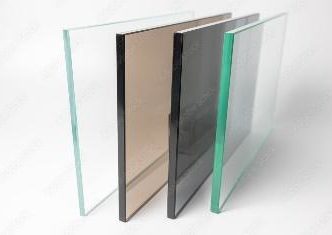 NEUTRAL DENSITY
 PRISMS & RETROREFLECTORS
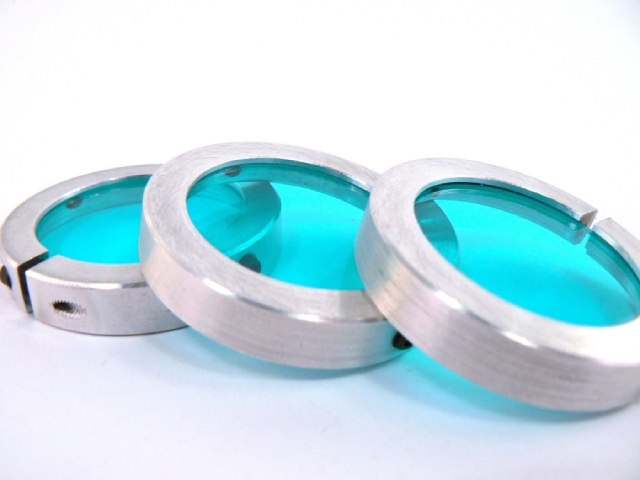 ASSEMBLIES
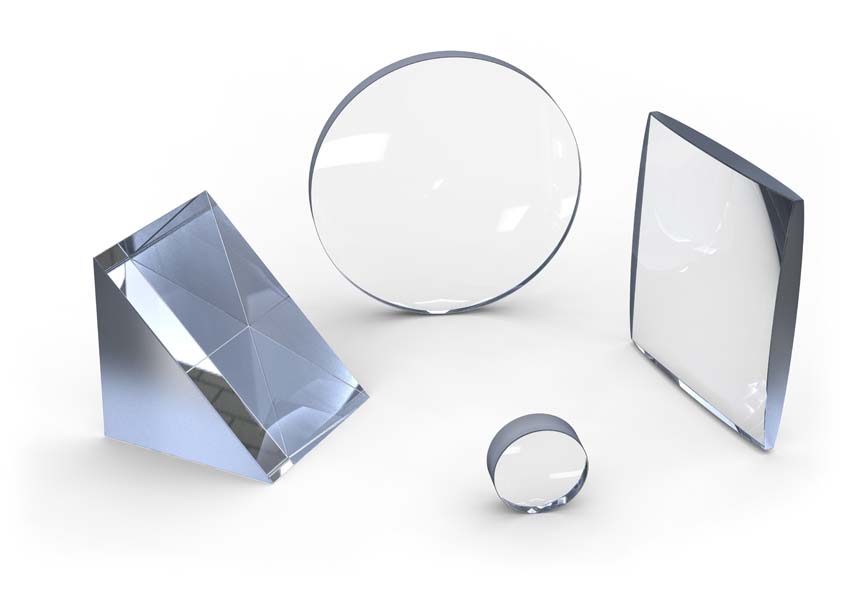 OPTICAL LENSES
 NIGHT VISION FILTERS
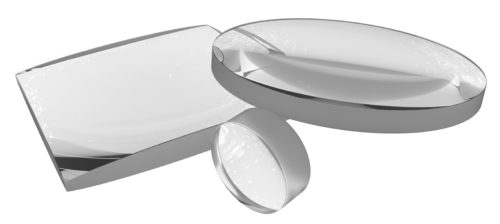 ACHROMATIC LENSES
 OPTICAL BEAM SPLITTERS
Why Working Directly with a Glass Optics Manufacturer Gives Your Project a Competitive Advantage
Created at : Aug 10 2026
Why Working Directly with a Glass Optics Manufacturer Gives Your Project a Competitive Advantage
Behind nearly every advanced imaging system, laser, medical device, aerospace instrument, or scientific breakthrough is a collection of precision optical components that must perform flawlessly. While lenses, mirrors, windows, filters, and prisms may appear to be simple pieces of glass, producing optics capable of meeting today's demanding performance standards requires extensive engineering expertise, sophisticated manufacturing equipment, and rigorous quality control.
When sourcing these components, companies often face a choice between purchasing standard optics from a distributor or partnering directly with a glass optics manufacturer. Although distributors can provide convenient access to catalog products, they typically offer limited customization and technical support. A manufacturer, on the other hand, becomes an extension of the engineering team, helping customers develop optical solutions tailored to their exact application.
For organizations building high-performance optical systems, working directly with a manufacturer can lead to better product performance, lower long-term costs, faster development cycles, and a more reliable supply chain.
A Manufacturing Partner Rather Than Simply a Supplier
The most significant advantage of working directly with a glass optics manufacturer is the relationship itself. Rather than simply fulfilling an order for an existing part number, manufacturers work to understand the application's goals, operating environment, and performance requirements before production even begins.
Every optical system presents unique challenges. Some must survive extreme temperatures or constant vibration, while others demand exceptional image clarity, precise laser transmission, or resistance to harsh chemicals. Manufacturers evaluate these requirements alongside production considerations to recommend practical solutions that balance performance, manufacturability, and cost.
Because they understand how optical components are actually produced, manufacturers can often identify opportunities to simplify designs, improve production efficiency, or eliminate unnecessary expense before fabrication starts. These engineering conversations frequently save customers significant time and money while producing a better final product.
Custom Optics Designed Around Your Application
Standard catalog optics work well for many general-purpose applications, but today's industries increasingly require custom solutions. Medical imaging systems, aerospace sensors, semiconductor equipment, industrial lasers, and scientific instruments often demand dimensions, tolerances, or optical characteristics that simply are not available off the shelf.
A glass optics manufacturer can fabricate components specifically for the intended application, allowing engineers to determine the ideal diameter, thickness, curvature, surface finish, flatness, and other critical specifications instead of designing around existing inventory.
This flexibility extends across virtually every type of optical component. Manufacturers routinely produce precision lenses, optical windows, mirrors, prisms, filters, beam splitters, cylindrical optics, and complete optical assemblies, each engineered to meet the exact performance objectives of the customer. Rather than accepting design compromises, engineers gain the freedom to optimize the entire optical system.
Expert Guidance on Material Selection
Choosing the proper optical material is one of the most important decisions in any optical design. Glass is not a single material but a broad family of substrates, each with distinct optical, mechanical, and thermal characteristics.
Some materials provide exceptional visible light transmission, while others are optimized for ultraviolet or infrared wavelengths. Certain glasses perform well in demanding environmental conditions, while others offer superior thermal stability, chemical resistance, or mechanical durability.
An experienced manufacturer understands how these properties affect system performance and helps customers select materials that align with the operating environment and functional requirements. Instead of relying solely on catalog specifications, engineers benefit from practical manufacturing knowledge gained through years of producing optical components for diverse industries.
Making the correct material choice at the beginning of a project can improve performance, reduce production costs, and significantly increase the service life of the finished product.
Precision Optical Coatings Improve Performance
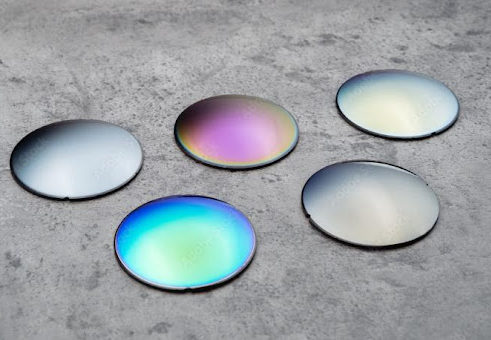
The performance of many optical components depends just as much on their coatings as on the glass itself. Modern optical coatings control how light is transmitted, reflected, filtered, or absorbed, allowing engineers to optimize components for highly specific applications.
Working directly with a manufacturer ensures that coating design becomes an integral part of the engineering process rather than an afterthought. Manufacturers understand how coatings interact with substrate materials, operating wavelengths, angles of incidence, and environmental conditions.
Whether a project requires anti-reflective coatings to maximize light transmission, highly reflective coatings for laser systems, precision bandpass filters, dichroic coatings, cold mirrors, or other specialized thin-film technologies, manufacturers can recommend and apply coatings that enhance overall system performance.
Because coatings are developed alongside the optical component itself, customers receive a fully integrated solution that performs exactly as intended.
Manufacturing Expertise That Delivers Exceptional Quality
Producing precision optics requires far more than cutting pieces of glass into the correct shape. Every stage of manufacturing influences optical performance, from generating and grinding to polishing, edging, centering, cleaning, coating, and inspection.
Modern manufacturers invest heavily in specialized equipment capable of achieving extraordinarily tight tolerances and exceptional surface quality. Sophisticated polishing techniques remove microscopic imperfections that could scatter light or degrade image quality, while precision metrology systems verify that every dimension meets specification.
Equally important is the experience of the technicians and engineers overseeing each production process. Precision optics manufacturing combines advanced technology with skilled craftsmanship, and maintaining consistency often depends on years of practical expertise.
This combination of equipment and experience allows manufacturers to produce components suitable for some of the world's most demanding optical applications.
Comprehensive Quality Assurance
Quality control represents another major advantage of working directly with a manufacturer. Unlike organizations that simply resell components, manufacturers inspect products throughout every stage of production using advanced metrology equipment specifically designed for optical measurement.
Surface figure, dimensional accuracy, coating performance, optical transmission, scratch and dig quality, flatness, radius accuracy, and numerous other characteristics are carefully verified before components leave the facility.
Rather than discovering performance issues during assembly or final product testing, customers receive optics that have already undergone extensive inspection and validation.
This attention to quality is especially valuable for industries where reliability is critical, including aerospace, defense, medical technology, semiconductor manufacturing, and scientific research.
Engineering Support Throughout Product Development
Few products remain unchanged from initial concept through final production. As prototypes are tested, engineers frequently refine designs to improve performance, reduce manufacturing costs, or simplify assembly.
When customers work directly with a manufacturer, experienced optical engineers remain available throughout the entire development process. They can recommend alternative materials, modified tolerances, different optical geometries, or production techniques that improve manufacturability without sacrificing performance.
This ongoing collaboration helps accelerate product development while reducing the risk of costly redesigns later in the project.
Instead of acting solely as a vendor, the manufacturer becomes a technical resource invested in the success of the finished product.
A More Reliable and Efficient Supply Chain
Managing multiple suppliers for optical components, coatings, and assemblies can complicate procurement and introduce unnecessary delays. Partnering with a manufacturer capable of producing complete optical solutions simplifies the supply chain by reducing the number of organizations involved.
Rather than coordinating separate vendors for lenses, windows, mirrors, filters, coatings, and final assemblies, customers often work with a single manufacturing partner responsible for producing and verifying the complete solution.
This streamlined approach reduces administrative complexity, shortens lead times, improves communication, and increases production consistency. It also simplifies future design revisions, since the manufacturer already possesses detailed knowledge of the product and its production history.
Long-Term Production Consistency
For many original equipment manufacturers, consistency across thousands—or even millions—of components is every bit as important as the quality of a single prototype.
Experienced optics manufacturers maintain documented production processes, calibrated inspection equipment, and rigorous quality systems that ensure each production lot matches previous builds. This repeatability minimizes variation between components, allowing customers to maintain consistent product performance over many years.
When equipment remains in production for extended periods, manufacturers also preserve tooling, inspection procedures, and engineering documentation that simplify repeat orders and reduce qualification time for future production runs.
This long-term consistency becomes an important competitive advantage for companies producing medical equipment, scientific instruments, aerospace systems, industrial automation products, and other precision technologies.
Supporting Projects from Prototype to Full Production
Most optical products begin as prototypes before progressing through testing, validation, pilot production, and eventually full-scale manufacturing. A capable optics manufacturer supports every phase of this journey.
Prototype quantities allow engineers to evaluate optical performance and validate designs before committing to production volumes. Once designs are finalized, the same manufacturing partner can scale production efficiently while maintaining identical quality standards and optical performance.
Because the manufacturer already understands the product and its performance requirements, transitioning from development to production becomes significantly smoother than qualifying a new supplier after prototypes have been completed elsewhere.
Lower Costs Over the Life of Your Product
Although initial component pricing naturally influences purchasing decisions, long-term value extends far beyond the cost of an individual optical element.
Poor-quality optics can introduce alignment issues, reduced transmission, shorter service life, increased warranty claims, assembly challenges, and inconsistent product performance. These hidden costs often exceed any savings achieved by purchasing lower-priced components.
Working directly with a quality manufacturer reduces these risks through better engineering support, superior production quality, consistent inspection, and reliable long-term manufacturing. As a result, companies frequently experience lower total ownership costs despite a modest difference in initial purchase price.
Sterling Precision Optics: A Trusted Manufacturing Partner
Choosing the right optics manufacturer is ultimately about selecting a partner capable of supporting your product from concept through production. Sterling Precision Optics combines precision manufacturing, advanced optical fabrication capabilities, and decades of engineering expertise to help customers develop custom optical solutions for some of the world's most demanding applications.
Whether producing precision lenses, optical windows, mirrors, filters, prisms, custom optical coatings, or complete optical assemblies, Sterling Precision Optics works closely with customers to ensure every component meets exact specifications for optical performance, dimensional accuracy, and long-term reliability.
By combining technical collaboration with rigorous manufacturing and quality assurance processes, Sterling Precision Optics helps organizations reduce development time, improve system performance, and build dependable products that perform consistently in challenging operating environments.
Investing in the Right Manufacturing Relationship
As optical systems become increasingly sophisticated, the value of working directly with a glass optics manufacturer continues to grow. Modern applications demand more than standard catalog components—they require engineering expertise, precision manufacturing, advanced coatings, consistent quality, and dependable long-term support.
A manufacturer brings all of these capabilities together under one roof, providing customers with a partner that understands both the science of optics and the realities of production. From the earliest design discussions through full-scale manufacturing, this collaborative approach leads to better-performing products, more efficient development, and greater confidence in every optical component that becomes part of the finished system.
For companies seeking precision, customization, and long-term reliability, partnering with an experienced manufacturer such as Sterling Precision Optics is not simply a purchasing decision—it is a strategic investment in the success of every optical project.