
 CUSTOM OPTICAL FILTERS
 OPTICAL WINDOWS
 OPTICAL COATINGS
 UV OPTICS
 CYLINDRICAL OPTICS
 CUSTOM TEMPERED OPTICS
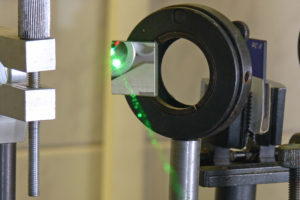 OPTICAL MIRRORS
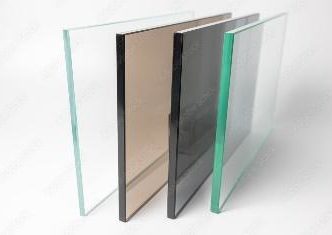 NEUTRAL DENSITY
 PRISMS & RETROREFLECTORS
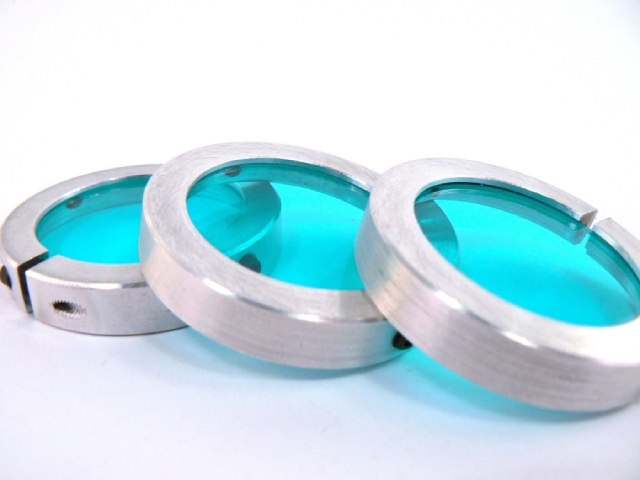 ASSEMBLIES
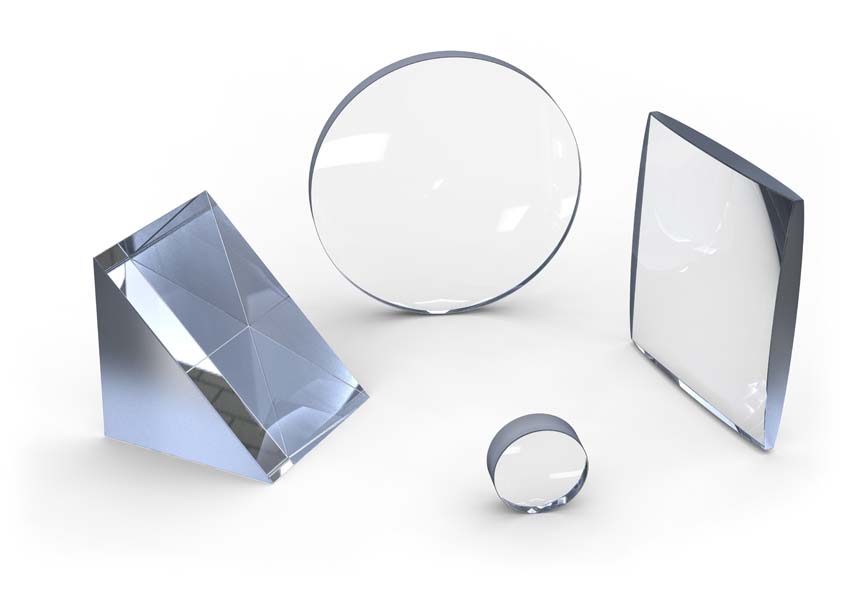 OPTICAL LENSES
 NIGHT VISION FILTERS
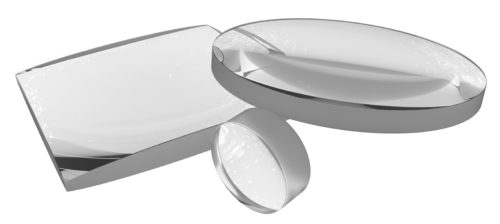 ACHROMATIC LENSES
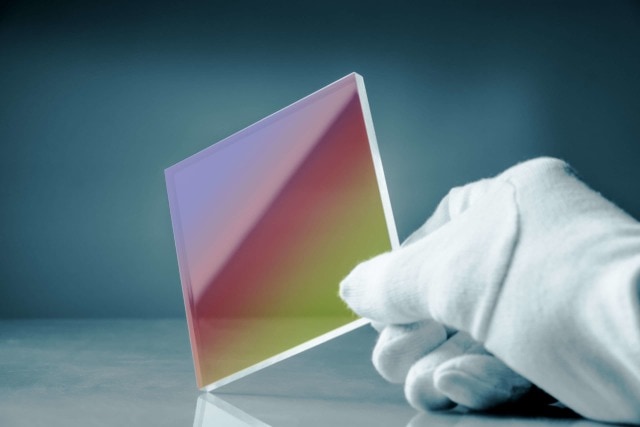 OPTICAL BEAM SPLITTERS
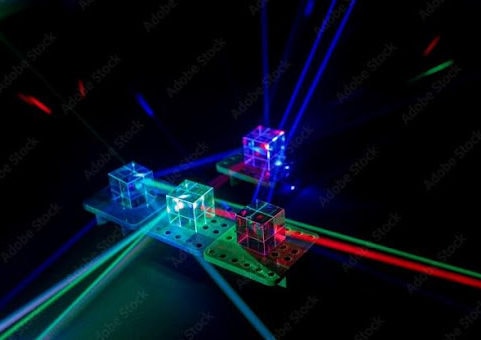
How Aspheric Lenses Are Manufactured: Precision Processes Behind Modern Optics
Created at : Jan 06 2026
Aspheric lenses have become a cornerstone of modern optical design, enabling smaller, lighter, and higher-performance systems across industries ranging from consumer electronics to aerospace and medical imaging. While their benefits are widely recognized, the way these lenses are manufactured is often less understood. Fabricating an aspheric lens is a blend of advanced engineering, precision machining, materials science, and meticulous quality control. Unlike traditional spherical lenses, aspheric optics demand manufacturing processes capable of producing complex, continuously changing surface profiles with extreme accuracy.
Why Aspheric Geometry Changes Everything
At the most fundamental level, the challenge of manufacturing aspheric lenses lies in their geometry. A spherical lens can be produced with relatively straightforward grinding and polishing techniques because its surface curvature is constant. An aspheric lens, by contrast, has a surface that changes curvature from the center to the edge. This shape is specifically designed to correct aberrations such as spherical aberration, coma, and distortion, but it also means there is no single radius of curvature to reference during fabrication. Every point on the surface must be created and verified individually.
Choosing the Right Manufacturing Method
The manufacturing method selected for an aspheric lens depends on several factors: material choice, lens size, required surface accuracy, optical wavelength, production volume, and cost constraints. There is no single “best” process; instead, manufacturers choose from a toolbox of specialized techniques, often combining multiple methods to achieve the final result.
Precision Glass Molding for High-Volume Production
One of the most widely used approaches for high-volume production is precision glass molding. In this process, optical glass is first formed into a preform with carefully controlled dimensions. The glass preform is then heated to a temperature near its softening point and pressed between two ultra-precise molds that define the aspheric surfaces. Once pressed, the glass is cooled in a controlled manner to lock in the final shape.
Precision glass molding allows manufacturers to produce large quantities of identical aspheric lenses with excellent repeatability and minimal need for post-processing. This makes it especially attractive for applications such as smartphone cameras, endoscopes, and compact imaging systems. However, the process requires significant upfront investment in mold fabrication, and it is limited to glass types that can withstand repeated thermal cycling without degrading.
CNC Grinding and Polishing for Custom and Large Optics
For lower production volumes or larger lenses, CNC grinding and polishing remains a core manufacturing method. This approach begins with a glass blank that is ground using computer-controlled machinery to approximate the desired aspheric profile. Unlike traditional grinding, which relies on simple tool paths, aspheric grinding uses complex algorithms to control tool position and pressure across the surface.
Once the basic shape is achieved, the lens undergoes a series of polishing steps to improve surface smoothness and optical performance. CNC-based methods are slower and more labor-intensive than molding, but they offer unmatched flexibility. Custom lens designs, prototypes, and high-precision optics for scientific or aerospace use are often produced this way.
Diamond Turning for Non-Glass and Infrared Optics
Diamond turning is another critical technique in aspheric lens fabrication, particularly for materials that are difficult or impractical to process using traditional glass methods. In diamond turning, a single-point diamond cutting tool machines the lens surface directly on an ultra-precise lathe. This process is capable of producing nanometer-level surface accuracy and is commonly used for plastics, infrared materials such as germanium and silicon, and metal optics.
Diamond turning is especially valuable in defense and infrared imaging applications, where non-glass materials are required. While the process can produce extremely accurate shapes, it may leave microscopic tool marks that need additional finishing if the lens is intended for visible-light use.
Ultra-Precision Finishing with Magnetorheological Techniques
To achieve the highest levels of precision, many manufacturers rely on advanced finishing techniques such as magnetorheological finishing. This process uses a polishing fluid whose stiffness can be controlled by a magnetic field. By precisely managing the fluid’s behavior, manufacturers can selectively remove material at the nanometer scale, correcting small surface errors left behind by grinding or turning.
Magnetorheological finishing is a deterministic process, meaning the amount of material removed can be predicted and controlled with high accuracy. While the equipment required is expensive, this method is indispensable for optics used in high-performance scientific instruments, laser systems, and space applications.
Plastic Injection Molding for Lightweight, High-Volume Lenses
Plastic aspheric lenses represent a different manufacturing path altogether. Injection molding allows molten optical polymers to be injected into precision molds that define the aspheric shape in a single step. This approach is ideal for very high-volume, cost-sensitive applications such as eyeglasses, consumer electronics, and augmented or virtual reality devices.
Plastic lenses are lightweight and inexpensive to produce at scale, but they typically offer lower thermal stability and long-term optical performance compared to glass. As a result, they are often chosen when size, weight, and cost matter more than extreme optical precision.
Hybrid and Replication Techniques
In some cases, manufacturers use hybrid techniques that combine the strengths of multiple processes. One common example is replicating a thin polymer aspheric surface onto a glass substrate. This approach reduces cost while maintaining better optical and thermal stability than a fully plastic lens. Hybrid methods are often used when performance requirements exceed what plastic alone can deliver, but full glass aspherics would be prohibitively expensive.
The Critical Role of Metrology and Quality Control
Regardless of the fabrication method, metrology and quality control are just as critical as machining. Measuring an aspheric surface is far more complex than measuring a spherical one. Traditional gauges and simple interferometers are often insufficient. Instead, manufacturers rely on advanced techniques such as interferometry with computer-generated holograms, high-resolution profilometry, and coordinate measuring machines.
These tools allow engineers to compare the manufactured surface against the intended design with nanometer-level accuracy. Without precise measurement, it would be impossible to verify that an aspheric lens meets its optical specifications.
Precision Manufacturing That Shapes Modern Optics
The manufacturing of aspheric lenses is not simply about shaping glass or plastic; it is about controlling light with extreme precision. Each process step builds on the last, and even small errors can compromise performance. This is why many aspheric lenses pass through multiple fabrication and finishing stages before they are approved for use.
As demand grows for smaller, more powerful optical systems, aspheric lenses will continue to play an increasingly important role. Advances in machining, molding technologies, and surface metrology are steadily reducing costs and expanding what is possible. What was once considered exotic is now a standard component in devices used every day, quietly enabling the clarity and performance of modern optical systems.