
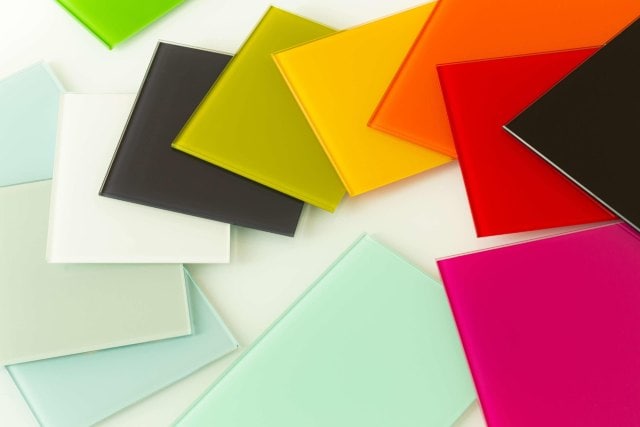
 CUSTOM OPTICAL FILTERS
 OPTICAL WINDOWS
 OPTICAL COATINGS
 UV OPTICS
 CYLINDRICAL OPTICS
 CUSTOM TEMPERED OPTICS
 OPTICAL MIRRORS
 NEUTRAL DENSITY
 PRISMS & RETROREFLECTORS
 ASSEMBLIES
 OPTICAL LENSES
 NIGHT VISION FILTERS
 ACHROMATIC LENSES
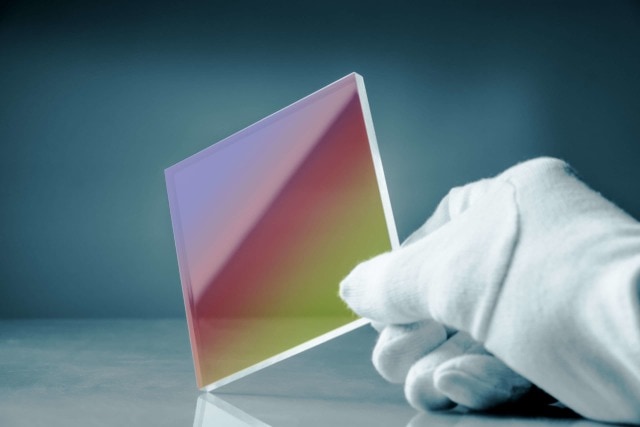 OPTICAL BEAM SPLITTERS
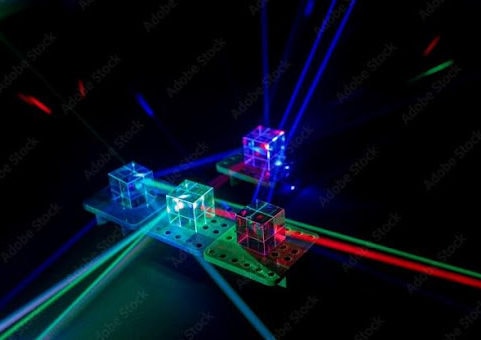
Creating Custom Wavelengths Using Overlapping Color Filter Glass
Created at : Jan 23 2026
Case Study:
Creating Custom Wavelengths Using Overlapping Color Filter Glass
Company
Sterling Precision Optics Inc.
Overview
Sterling Precision Optics Inc. partnered with a customer requiring a custom optical wavelength that could not be achieved using a single off the shelf color filter glass. By using overlapping colored filter glass combinations, material expertise, and precision processing, Sterling developed a reliable solution that met stringent optical performance requirements while maintaining manufacturability and consistency.
The Challenge
Standard single filter solutions were unable to meet the customer’s wavelength requirements. Key challenges included:
- Achieving a specific transmission band outside standard catalog offerings
- Maintaining optical consistency across multiple production runs
- Ensuring the solution could be reliably manufactured and scaled
The customer needed a solution that balanced optical precision, stability, and production feasibility.
Objectives
- Create a custom wavelength using commercially available colored filter glass
- Maintain repeatable optical performance across parts
- Provide a manufacturable and scalable solution
The Solution
Sterling Precision Optics engineered a custom spectral solution using a stacked, overlapping color filter glass approach incorporating SCHOTT OG530, SCHOTT BG40, and SCHOTT BG55 absorptive filter glasses. Each glass type was selected for its specific absorption characteristics and contribution to shaping the final transmission band.
-SCHOTT OG530: Employed as a long pass filter to establish the lower wavelength cutoff and suppress shorter wavelengths below approximately 530 nm.
-SCHOTT BG40: Utilized for its broadband absorption properties to attenuate unwanted near infrared transmission while contributing controlled visible-band shaping.
-SCHOTT BG55: Added to further refine the visible transmission profile and strengthen infrared suppression, enabling tighter control of the resulting passband.
By overlapping the transmission and absorption regions of these three filter glasses, Sterling created a composite spectral response that could not be achieved using a single filter type.
Controlling the thickness of each glass piece was a critical design parameter. By adjusting thickness, the effective absorption path length could be modified, enabling precise tuning of peak transmission and out of band blocking without altering the glass chemistry.
Implementation
1. Material Evaluation: Multiple colored filter glass options were reviewed to identify compatible overlap candidates.
2. Spectral Analysis: Transmission curves were analyzed to model combined wavelength behavior.
3. Thickness Optimization: Individual filter thicknesses were adjusted to shape the combined transmission band and suppress unwanted regions precisely.
4. Prototype Development: Sample assemblies were produced with controlled thickness variations.
5. Testing & Validation: Optical testing confirmed the target wavelength band and consistency across parts.
6. Process Finalization: Manufacturing parameters were documented to support repeatable production.
Optical Bonding Methods for Filter Assemblies
To ensure optical performance and mechanical stability when stacking multiple color filter glass elements, Sterling Precision Optics implemented a controlled bonding strategy using UV curable optical adhesives and two-part optical epoxies, with assembly order driven by material specific transmission properties.
- UV Curable Optical Adhesives: UV curable adhesives were used where rapid fixturing and precise alignment were required; however, assembly order was critical. Because OG530 does not transmit UV light, UV curing could not occur through this glass type. As a result, the filter stack was assembled in a specific sequence so that UV exposure was applied through UV transmissive glass layers (BG40 and BG55), ensuring full adhesive cure.
- Two Part Optical Epoxies: Two part optical epoxies were employed where curing could not rely on UV transmission or where enhanced mechanical and environmental stability was required. Cure profiles were tightly controlled to minimize residual stress, birefringence, and optical distortion within the bonded filter stack.
Bond line thickness and adhesive placement were carefully managed to maintain consistent optical path length and prevent unintended spectral shift. This controlled bonding approach ensured reliable adhesion while preserving the spectral response of the SCHOTT OG530, SCHOTT BG40, and SCHOTT BG55 filter assembly.
Results
- Achieved a custom wavelength band not available through single filter solutions
- Consistent spectral performance across prototype and production parts
- Reduced development time compared to creating a custom melt
- Scalable solution suitable for ongoing production
Verification and Inspection Methods
- Dimensional and Bond Line Inspection: Post bond inspection verified glass thickness, parallelism, and bond line uniformity to ensure optical path length remained within defined tolerances.
- Optical Inspection and Spectral Verification: Transmission testing was performed on completed assemblies to confirm that the target wavelength band and out of band blocking met specification, validating that bonding and cure processes did not introduce spectral shift or distortion.
- Adhesive Cure Verification: Visual inspection and controlled handling checks were used to confirm full adhesive cure, particularly for UV-cured bonds where cure depended on transmission through SCHOTT BG40 and SCHOTT BG55 layers.
These verification and inspection methods ensured that each bonded filter assembly met both optical and process requirements prior to release.
Conclusion
This case study demonstrates Sterling Precision Optics’ ability to engineer custom spectral solutions using overlapping colored filter glass. By combining deep material knowledge, precise thickness control, and controlled bonding methods, Sterling delivers flexible, high-performance optical solutions for advanced applications where standard filters fall short.
Key Takeaway
Overlapping color filter glass, when engineered with thickness tuning and proper bonding, provides a reliable method for achieving custom wavelengths with consistent performance and manufacturability.