
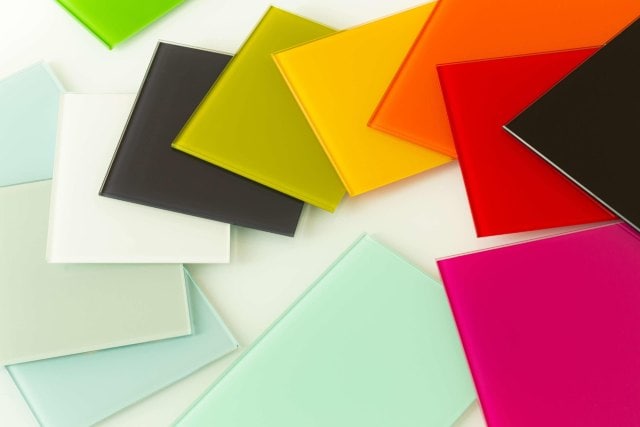
 CUSTOM OPTICAL FILTERS
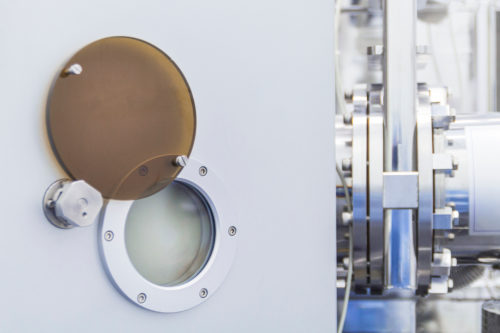 OPTICAL WINDOWS
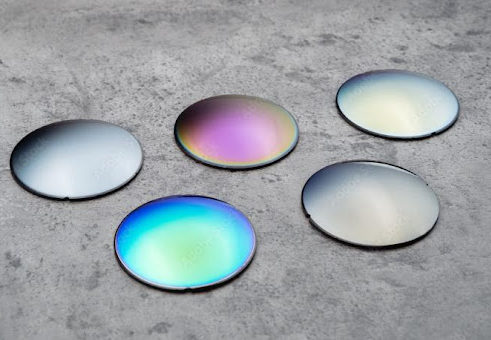 OPTICAL COATINGS
 UV OPTICS
 CYLINDRICAL OPTICS
 CUSTOM TEMPERED OPTICS
 OPTICAL MIRRORS
 NEUTRAL DENSITY
 PRISMS & RETROREFLECTORS
 ASSEMBLIES
 OPTICAL LENSES
 NIGHT VISION FILTERS
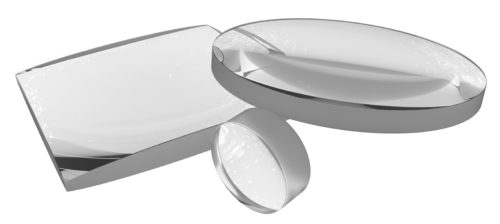 ACHROMATIC LENSES
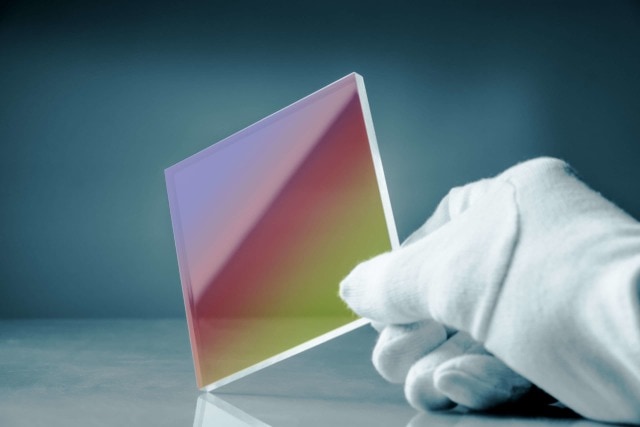 OPTICAL BEAM SPLITTERS
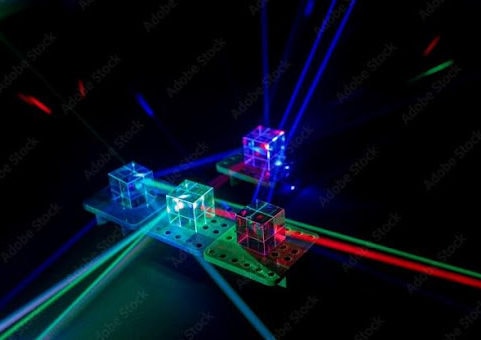
What Are Custom Optical Coatings and Why Do They Matter?
Created at : Dec 30 2025
In modern optical systems, performance is rarely defined by the glass alone. While precision lenses, mirrors, and prisms form the foundation of any optical assembly, it is the optical coating applied to those components that ultimately determines how light is transmitted, reflected, filtered, or controlled. This is where custom optical coatings play a critical role.
Custom optical coatings are engineered, ultra-thin layers deposited onto optical components to precisely manipulate light for a specific application. Unlike standard or off-the-shelf coatings, custom coatings are designed around exact performance requirements, environmental conditions, and optical parameters. The result is improved efficiency, accuracy, durability, and reliability across a wide range of industries.
Understanding Optical Coatings
Optical coatings are made from multiple layers of dielectric or metallic materials, each measured in nanometers. These layers are deposited onto optical substrates—such as glass, fused silica, sapphire, or crystalline materials—using advanced vacuum deposition techniques. By controlling the thickness, sequence, and materials used, manufacturers leverage the principles of optical interference to enhance or suppress reflection and transmission at specific wavelengths.
Even a single uncoated glass surface reflects approximately four percent of incoming light. In high-performance optical systems, these losses quickly add up. Optical coatings address this issue by reducing unwanted reflections, increasing transmission, or selectively reflecting light where needed.
What Makes an Optical Coating “Custom”?
A custom optical coating is designed for a specific optical requirement, rather than a broad, general-purpose application. Every detail of the coating is engineered to match the intended use of the optic. This includes:
- Target wavelength or wavelength range (UV, visible, near-infrared, infrared, or laser-specific lines)
- Angle of incidence, whether normal or highly oblique
- Substrate material, which affects adhesion and optical behavior
- Environmental conditions, such as humidity, temperature extremes, vacuum exposure, or chemical contact
- Performance tolerances, including reflectivity, transmission, laser damage threshold, and durability
Because no two optical systems are exactly alike, custom coatings ensure that the optic performs optimally within its intended environment.
Common Types of Custom Optical Coatings
Custom optical coatings are designed to achieve specific light-control functions. Some of the most common include:
Anti-Reflective (AR) Coatings
These coatings reduce surface reflections and increase light transmission. AR coatings are critical in imaging systems, laser optics, sensors, and medical devices where signal strength and clarity are essential.
High-Reflective (HR) and Dielectric Mirror Coatings
Designed to reflect specific wavelengths with extremely high efficiency, these coatings are commonly used in laser cavities, beam steering systems, and scientific instruments.
Optical Filter Coatings
Filter coatings selectively transmit or block certain wavelengths. Examples include bandpass, long-pass, short-pass, and notch filters. These are widely used in spectroscopy, fluorescence imaging, and machine vision.
Beam Splitter Coatings
Beam splitters divide incoming light into two or more paths based on wavelength, polarization, or intensity ratio. Custom designs ensure accurate and repeatable light separation.
Protective and Durable Coatings
In harsh environments, coatings may also serve a protective function, improving resistance to abrasion, moisture, UV radiation, and chemical exposure.
Why Custom Optical Coatings Are Essential
Off-the-shelf coatings can work well for general applications, but they often fall short when precision, reliability, or environmental resistance is critical. Custom optical coatings offer several key advantages:
Optimized Performance
Custom coatings are engineered to deliver peak optical performance under exact operating conditions. This results in higher efficiency, improved signal-to-noise ratios, and better system accuracy.
System-Level Integration
By designing coatings alongside the optical component itself, manufacturers ensure compatibility with the broader system, reducing the need for workarounds or compromises.
Improved Durability and Longevity
Environmental factors such as temperature fluctuations, humidity, and mechanical wear can degrade standard coatings. Custom coatings are designed to withstand these conditions, extending the service life of optical components.
Cost Efficiency Over Time
While custom coatings may require greater upfront engineering, they often reduce long-term costs by minimizing maintenance, replacement, and system downtime.
Industries That Rely on Custom Optical Coatings
Custom optical coatings are essential across a wide range of industries where light control and precision are critical.
In industrial and scientific applications, they are used in lasers, metrology systems, sensors, and inspection equipment. In medical technology, custom coatings enhance imaging clarity in diagnostic devices, endoscopes, and surgical systems.
The aerospace and defense sectors rely heavily on coated optics for night vision systems, targeting optics, satellites, and surveillance equipment, where performance and reliability are mission-critical.
In semiconductor manufacturing, optical coatings are vital for lithography, inspection, and metrology tools that require extreme accuracy at microscopic scales. Even consumer technologies, such as cameras, AR/VR systems, and specialty displays, benefit from advanced custom coating designs.
The Manufacturing Process
Creating a custom optical coating is a collaborative process. It begins with a detailed understanding of the application, including optical performance targets, environmental requirements, and mechanical constraints. Engineers then model the coating design using specialized software before manufacturing test samples.
Deposition methods such as electron-beam evaporation, ion-assisted deposition, or sputtering are used to apply the coating layers with extreme precision. Rigorous testing ensures that the final coating meets all optical and durability specifications before production release.
Conclusion
Custom optical coatings are a cornerstone of modern optical engineering. By precisely controlling how light interacts with optical surfaces, these coatings dramatically improve system performance, efficiency, and reliability. Whether reducing reflections, filtering wavelengths, or protecting sensitive components, custom optical coatings enable optical systems to perform exactly as intended.
In applications where precision matters and failure is not an option, custom optical coatings are not an enhancement—they are a necessity.