
 CUSTOM OPTICAL FILTERS
 OPTICAL WINDOWS
 OPTICAL COATINGS
 UV OPTICS
 CYLINDRICAL OPTICS
 CUSTOM TEMPERED OPTICS
 OPTICAL MIRRORS
 NEUTRAL DENSITY
 PRISMS & RETROREFLECTORS
 ASSEMBLIES
 OPTICAL LENSES
 NIGHT VISION FILTERS
 ACHROMATIC LENSES
 OPTICAL BEAM SPLITTERS
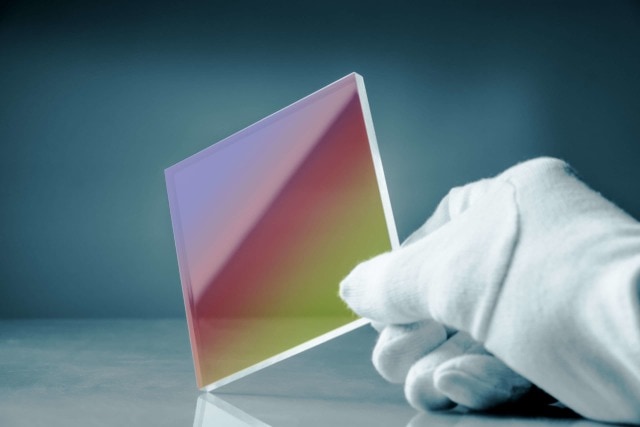
Optical Windows: The Transparent Gatekeepers of Precision Optical Systems
Created at : Mar 09 2026
In many modern technologies—ranging from laser manufacturing systems to space satellites—light must pass through protective barriers without losing clarity or accuracy. That is where optical windows play a critical role. Though they may appear simple at first glance, optical windows are highly engineered components designed to transmit light while protecting sensitive optical systems from environmental hazards.
These precision optical components are used across a wide variety of industries, including aerospace, medical technology, semiconductor manufacturing, and industrial automation. Their ability to maintain optical performance while shielding internal components makes them indispensable in advanced optical systems.
What Are Optical Windows?
An optical window is a flat, transparent component made from optical-grade materials that allows light to pass through without significantly altering the beam or image. Unlike lenses, which bend or focus light, optical windows are designed primarily to transmit light while maintaining its original characteristics.
In practical terms, an optical window acts as a protective interface between an optical system and its environment. It enables light to enter or exit a device while keeping internal optics protected from dust, pressure, moisture, or chemical exposure.
For example, in a laser cutting system, an optical window allows the laser beam to exit the enclosure while protecting the internal mirrors and lenses from smoke and debris generated during cutting.
Optical Windows vs. Lenses: Understanding the Difference
While both optical windows and lenses are transparent components used in optical systems, they serve very different purposes.
Optical windows are typically manufactured with flat, parallel surfaces so that light passes through without changing direction. Their purpose is protection and environmental separation.
Optical lenses, on the other hand, have curved surfaces that refract light to focus, magnify, or form images. Lenses are responsible for controlling and manipulating light within optical systems.
In simple terms:
-
Optical windows transmit light
-
Lenses manipulate light
This distinction is important in optical system design because introducing curvature where none is needed can distort a beam or image.
Why Optical Windows Are Essential
Optical windows may appear simple, but they serve several crucial functions in advanced technologies.
Environmental Protection
One of the most important roles of an optical window is protecting sensitive optical components such as lenses, mirrors, sensors, and detectors. These components are often delicate and easily damaged by contamination or physical contact.
Optical windows shield internal systems from:
-
Dust and airborne particles
-
Moisture and humidity
-
Chemicals and corrosive substances
-
Mechanical damage
This protection significantly improves the reliability and lifespan of optical equipment.
Maintaining Controlled Environments
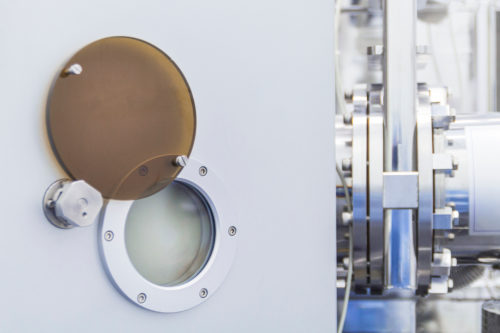
Many scientific and industrial processes require controlled environments, such as vacuum chambers or pressurized systems. Optical windows allow researchers or instruments to observe or measure processes without breaking the seal.
Examples include:
-
Vacuum chambers used in physics experiments
-
Semiconductor processing equipment
-
Environmental test chambers
-
High-pressure industrial reactors
Without optical windows, it would be impossible to monitor these systems using light-based instruments.
Enabling Laser and Sensor Systems
Optical windows are widely used in laser systems and optical sensors. They allow beams or signals to pass into or out of an enclosed system while maintaining a protective barrier.
Common applications include:
-
Industrial laser cutting and welding
-
LiDAR sensors
-
spectroscopy equipment
-
environmental monitoring systems
-
optical measurement devices
In these cases, the window must transmit specific wavelengths while introducing minimal distortion.
Materials Used for Optical Windows
The performance of an optical window depends heavily on the material used to fabricate it. Different materials are selected based on the wavelength of light, environmental conditions, and durability requirements.
Some of the most commonly used materials include:
Fused Silica
Fused silica offers excellent transmission in ultraviolet and visible wavelengths and provides outstanding thermal stability. It is widely used in laser systems and semiconductor manufacturing equipment.
BK7 Optical Glass
BK7 is one of the most common optical materials. It provides good transmission in the visible spectrum and is often used in cameras, sensors, and laboratory instruments.
Sapphire
Sapphire optical windows are extremely hard and scratch-resistant. They are ideal for harsh environments such as aerospace applications or industrial inspection systems.
Calcium Fluoride
Calcium fluoride transmits ultraviolet and infrared wavelengths effectively, making it valuable in spectroscopy and specialized optical instrumentation.
Germanium
Germanium is widely used for infrared optics, particularly in thermal imaging systems and night vision equipment.
Selecting the right material ensures that the window transmits the desired wavelength range while withstanding environmental conditions.
How Optical Windows Are Fabricated
Although optical windows appear simple, their fabrication requires highly precise manufacturing techniques.
Raw Material Preparation
Production begins with high-purity optical materials grown in controlled environments to ensure clarity and uniformity. These materials are supplied as large boules or blocks.
Cutting and Shaping
Diamond saws or wire cutting systems slice the raw material into rough blanks. These blanks are then ground to the required diameter and thickness using precision grinding equipment.
Surface Grinding and Lapping
The surfaces are ground using progressively finer abrasives to remove saw marks and improve flatness. Lapping further refines the surface and improves parallelism between the two faces.
Precision Polishing
Optical polishing is the most critical step. Using pitch polishing tools and specialized polishing compounds, manufacturers achieve extremely smooth surfaces with nanometer-level roughness.
At this stage the window becomes fully transparent and begins to meet optical specifications.
Inspection and Metrology
Precision instruments such as interferometers measure flatness, parallelism, and surface quality. These measurements ensure the component meets strict optical tolerances.
Optical Coating
Many windows receive anti-reflective coatings to reduce reflection losses and improve light transmission. Other coatings may filter or reflect specific wavelengths depending on the application.
Industries That Rely on Optical Windows
Optical windows are used across a wide range of industries where precision optics are essential.
Aerospace and Defense
This sector is one of the largest consumers of optical windows. Applications include:
-
missile guidance systems
-
satellite sensors
-
infrared targeting systems
-
night vision devices
-
aerospace imaging systems
These systems often use durable materials such as sapphire or germanium to withstand extreme conditions.
Industrial Laser Manufacturing
Laser systems require protective windows to isolate the internal optics from heat, smoke, and debris generated during processing.
Typical uses include:
-
laser cutting systems
-
laser welding equipment
-
laser engraving machines
-
industrial measurement lasers
Semiconductor Manufacturing
Modern semiconductor fabrication relies heavily on optical processes. Optical windows are used in:
-
photolithography equipment
-
wafer inspection systems
-
UV processing chambers
Materials such as fused silica are preferred because they transmit ultraviolet wavelengths used in chip manufacturing.
Medical Technology
Medical imaging and laser systems frequently incorporate optical windows to protect sensitive internal optics.
Applications include:
-
endoscopic imaging systems
-
laser surgery devices
-
diagnostic spectroscopy instruments
-
medical imaging systems
Scientific Research
Laboratories and research institutions rely on optical windows for observation and measurement in controlled environments.
Examples include:
-
spectroscopy systems
-
high-energy physics experiments
-
vacuum chamber observation ports
-
environmental testing systems
Industrial Automation and Machine Vision
Modern manufacturing uses cameras and optical sensors for automated inspection and quality control. Optical windows protect these systems from dust, chemicals, and mechanical damage.
The Importance of Precision
Despite their simple appearance, optical windows must meet extremely tight tolerances to maintain optical performance. Key specifications often include:
-
high surface flatness
-
precise parallelism between surfaces
-
minimal surface defects
-
excellent transmission characteristics
Even small imperfections can introduce distortions, reflections, or signal loss.
For this reason, optical window manufacturing requires specialized equipment, skilled technicians, and advanced metrology tools.
A Small Component With a Big Impact
Optical windows may be among the simplest optical components in appearance, but they play a critical role in protecting and enabling modern optical systems. From aerospace sensors and semiconductor equipment to medical imaging devices and laser manufacturing systems, these precision components ensure that light can pass where it is needed while safeguarding delicate optics.
As industries continue to adopt advanced optical technologies, the demand for high-quality optical windows will continue to grow—supporting innovations in science, manufacturing, healthcare, and beyond.