
 CUSTOM OPTICAL FILTERS
 OPTICAL WINDOWS
 OPTICAL COATINGS
 UV OPTICS
 CYLINDRICAL OPTICS
 CUSTOM TEMPERED OPTICS
 OPTICAL MIRRORS
 NEUTRAL DENSITY
 PRISMS & RETROREFLECTORS
 ASSEMBLIES
 OPTICAL LENSES
 NIGHT VISION FILTERS
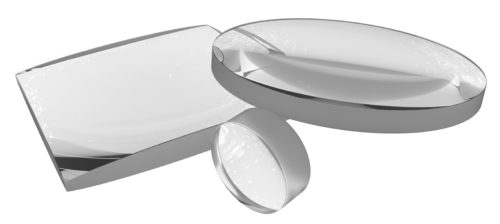 ACHROMATIC LENSES
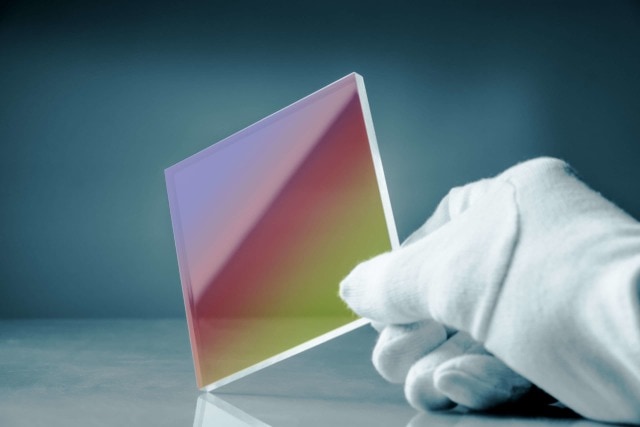 OPTICAL BEAM SPLITTERS
How High-Precision Optical Lenses Are Fabricated
Created at : Mar 04 2026
High-precision optical lenses are critical components used in technologies that rely on accurate light transmission, focusing, and imaging. From advanced microscopes and medical instruments to aerospace equipment and high-performance cameras, these lenses enable systems to capture, manipulate, and analyze light with extraordinary accuracy. Because even the smallest imperfection can distort images or alter measurements, the fabrication of high-optics lenses requires a highly controlled and precise manufacturing process.
Producing these lenses involves multiple stages, including optical design, material preparation, shaping, polishing, coating, and rigorous testing. Each step is carefully managed to ensure that the final lens meets extremely tight tolerances and performs exactly as intended in its application.
The Importance of Precision in Optical Manufacturing
Optical lenses differ from ordinary glass components because their surfaces must interact with light in very specific ways. The curvature, thickness, and material properties of a lens determine how light is refracted and focused. In high-precision optics, even microscopic variations in shape or surface smoothness can negatively affect performance.
For this reason, optical lenses used in scientific, medical, aerospace, and imaging systems are manufactured with tolerances that can reach fractions of the wavelength of light. Achieving this level of precision requires specialized fabrication techniques and sophisticated measurement equipment.
Step 1: Optical Design and Engineering
The fabrication process begins long before any material is shaped. Engineers first design the lens using advanced optical modeling software. These programs simulate how light rays travel through different materials and shapes, allowing engineers to optimize the lens for its intended application.
During this design phase, several critical parameters are determined, including:
-
Lens curvature and geometry
-
Focal length
-
Refractive index requirements
-
Surface accuracy tolerances
-
Environmental and performance conditions
By modeling the lens digitally, engineers can predict its optical performance and refine the design before manufacturing begins.
Step 2: Raw Material Selection and Preparation
High-precision optical lenses are typically made from specialized materials chosen for their optical clarity and physical stability. Common materials include:
-
Optical glass such as fused silica or borosilicate
-
Crystalline materials for specialized applications
-
High-performance optical plastics
The raw materials must be extremely pure to prevent distortions caused by bubbles, inclusions, or impurities. Glass materials are melted under controlled conditions and then slowly cooled through a process known as annealing, which relieves internal stresses and stabilizes the structure of the material.
This careful preparation ensures that the optical material will remain stable during machining and throughout its operational life.
Step 3: Creating Lens Blanks
Once the material has been prepared, it is shaped into lens blanks—thick, circular discs that serve as the starting point for the finished lens.
Lens blanks can be created through several methods, including:
-
Cutting discs from larger blocks of optical glass
-
Precision glass molding or pressing
-
Casting specialized optical plastics
These blanks are intentionally made slightly larger than the final lens dimensions. This allows additional material to be removed during later shaping and finishing steps to achieve the precise optical form.
Step 4: Rough Grinding and Shaping
After the lens blanks are produced, the surfaces must be shaped to match the intended optical curvature. This is done through a grinding process that uses diamond-coated tools or abrasive wheels.
During rough grinding, machines remove significant amounts of material to create the approximate geometry of the lens. Depending on the design, the lens may require:
-
Convex surfaces
-
Concave surfaces
-
Flat optical surfaces
Although the grinding process establishes the general shape, the surface at this stage remains relatively rough and unsuitable for optical use. Further refinement is required to achieve the required precision.
Step 5: Fine Grinding and Lapping
Following rough shaping, the lens undergoes fine grinding and lapping, which gradually refines the surface geometry.
In this stage, the lens is pressed against a precisely shaped tool while an abrasive slurry is introduced between the surfaces. The abrasive particles remove small amounts of material, smoothing the surface and bringing it closer to its final shape.
The abrasives used in this step become progressively finer, allowing the surface to approach the exact curvature specified in the optical design.
Step 6: Precision Polishing
Polishing is one of the most critical stages in optical fabrication. The goal is to create a surface that is both perfectly shaped and extremely smooth.
Polishing tools made from materials such as pitch are used along with polishing compounds, often containing cerium oxide. These compounds gradually remove microscopic irregularities from the surface.
Through this process, surface roughness can be reduced to nanometer levels, producing the clarity required for high-performance optics. At this stage, the lens begins to exhibit the transparency and optical quality needed for imaging or light transmission.
Step 7: Advanced Finishing Techniques
For high-end optical systems—such as those used in aerospace, laser technology, and advanced scientific instruments—additional finishing methods may be used to achieve even greater precision.
Examples of advanced finishing techniques include:
-
Diamond turning, which uses a diamond cutting tool to produce extremely accurate surfaces
-
Magnetorheological finishing, a process that uses a magnetically controlled polishing fluid to refine surfaces with exceptional control
-
Ion beam finishing, which removes microscopic layers of material using a focused ion beam
These advanced techniques allow manufacturers to achieve surface accuracy that would be difficult or impossible with conventional polishing methods alone.
Step 8: Optical Coating
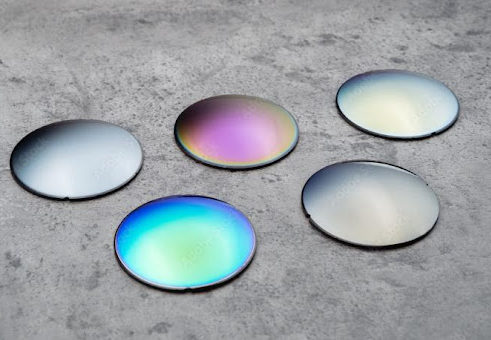
Once the lens surface has been fully polished, thin optical coatings are applied to enhance performance.
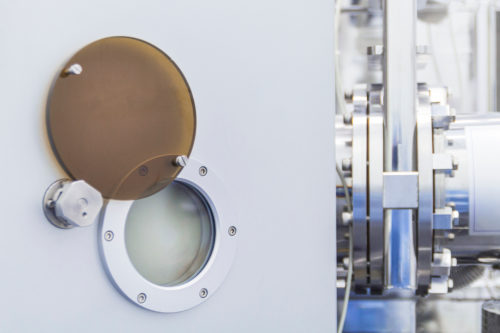
Coatings are deposited in vacuum chambers using specialized techniques such as physical vapor deposition. These coatings may serve several purposes, including:
-
Reducing reflection and improving light transmission
-
Protecting the surface from scratches or environmental damage
-
Enhancing reflectivity for mirror applications
Anti-reflective coatings, for example, are commonly used to increase the amount of light passing through the lens while minimizing glare.
Step 9: Inspection and Optical Testing
Before a lens can be approved for use, it must undergo rigorous inspection and testing to verify that it meets the required specifications.
Testing equipment may include:
-
Interferometers for measuring surface accuracy
-
Laser measurement systems for alignment and focus
-
Surface profilometers for evaluating surface roughness
These tools allow engineers to measure deviations from the intended shape with extremely high precision. In many cases, high-precision optics must meet tolerances measured in fractions of a wavelength of light.
Only lenses that pass these stringent quality checks proceed to final assembly or integration into optical systems.
The Role of Precision Optics in Modern Technology
The fabrication of high-precision optical lenses is a complex process that combines advanced engineering, specialized materials, and highly controlled manufacturing techniques. Each step—from initial design to final testing—plays a crucial role in ensuring that the finished lens performs reliably in demanding environments.
These lenses enable technologies that power modern scientific research, medical diagnostics, aerospace exploration, and high-resolution imaging. As technology continues to evolve, the demand for increasingly precise optical components will continue to drive innovations in optical fabrication and manufacturing.