
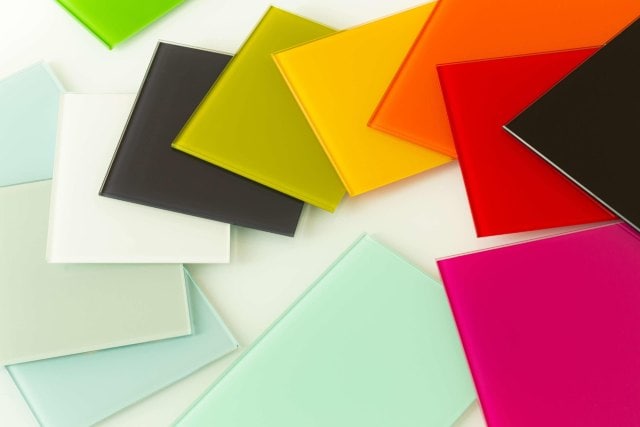
 CUSTOM OPTICAL FILTERS
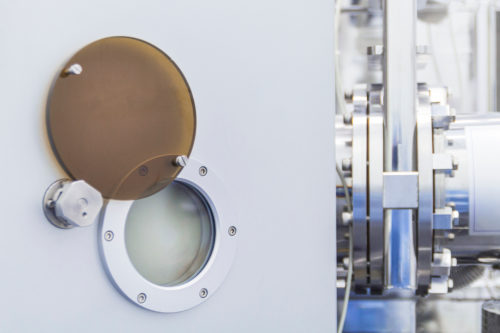 OPTICAL WINDOWS
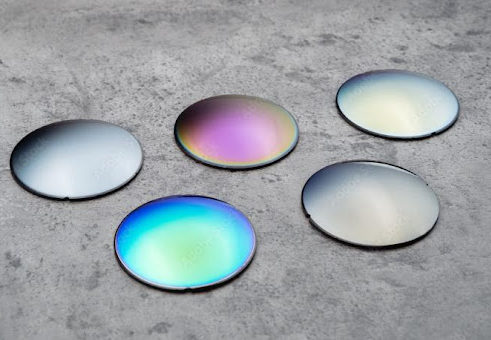 OPTICAL COATINGS
 UV OPTICS
 CYLINDRICAL OPTICS
 CUSTOM TEMPERED OPTICS
 OPTICAL MIRRORS
 NEUTRAL DENSITY
 PRISMS & RETROREFLECTORS
 ASSEMBLIES
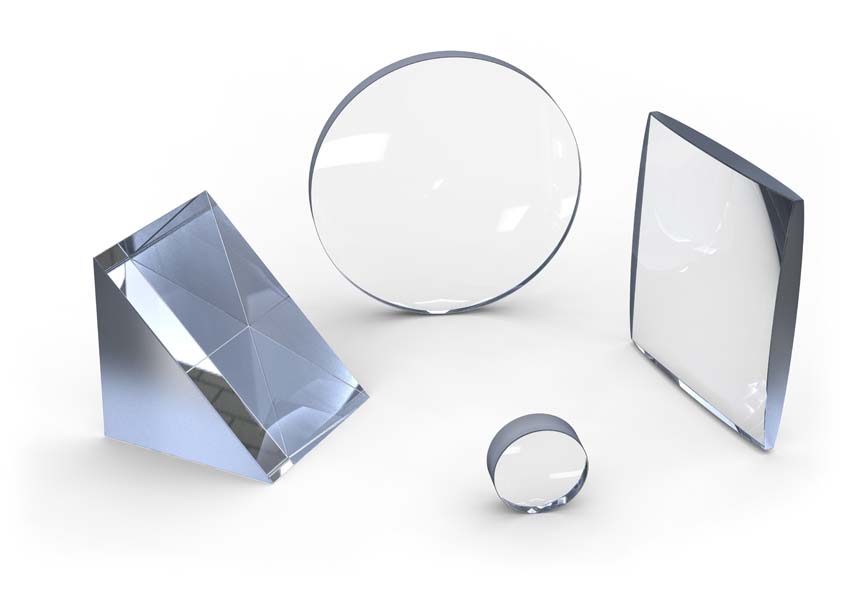 OPTICAL LENSES
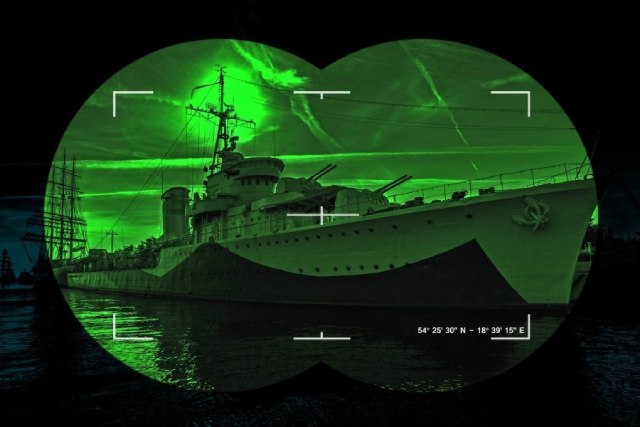 NIGHT VISION FILTERS
 ACHROMATIC LENSES
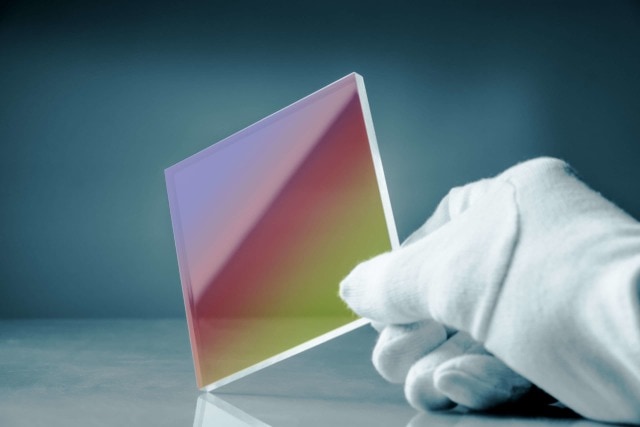 OPTICAL BEAM SPLITTERS
How Night Vision Filters Are Fabricated: The Science Behind Precision Optical Engineering
Created at : Feb 25 2026
Night vision technology has transformed modern aviation, defense systems, surveillance, industrial inspection, and even consumer electronics. At the heart of many of these systems lies a highly engineered optical component: the night vision filter.
While they may appear to be simple tinted lenses, night vision filters are actually the result of advanced material science, nanometer-scale coating processes, and rigorous optical testing. Their purpose is precise: to selectively transmit certain wavelengths of light—often near-infrared (NIR)—while blocking others, ensuring compatibility with night vision devices or enhancing low-light imaging performance.
Understanding the Purpose of Night Vision Filters
Night vision systems typically operate by detecting near-infrared light (roughly 700–900 nanometers) or, in the case of thermal imaging, even longer infrared wavelengths. However, uncontrolled visible light or stray wavelengths can:
-
Overwhelm image intensifiers
-
Reveal positions in tactical environments
-
Distort imaging clarity
-
Create cockpit lighting incompatibility in aviation
Night vision filters are engineered to control this light precisely. Depending on the application, they may:
-
Transmit near-infrared while blocking visible light
-
Block infrared while transmitting visible light
-
Suppress very specific wavelength bands (notch filters)
-
Support multi-band optical systems
The ability to manipulate light so precisely requires sophisticated fabrication techniques.
Step 1: Substrate Selection — Building the Foundation
The fabrication process begins with selecting the correct substrate, which serves as the structural base for the filter.
Common substrate materials include:
-
Optical glass (e.g., BK7, borosilicate, fused silica) – Ideal for high-clarity, high-stability applications
-
Polycarbonate or acrylic – Used in lightweight or impact-resistant designs
-
Infrared-transmissive materials (e.g., germanium) – Used in thermal imaging systems
The substrate must meet strict requirements:
-
High optical clarity
-
Dimensional stability
-
Tight flatness tolerances
-
Thermal compatibility with coating processes
Even minor defects at this stage can compromise final performance.
Step 2: Precision Shaping, Grinding, and Polishing
Once selected, the substrate is shaped to the required geometry:
-
Circular lenses
-
Rectangular display filters
-
Custom optical assemblies
The shaping process includes:
-
Cutting and edging
-
Grinding for dimensional accuracy
-
Lapping and polishing to optical-grade finish
Surface quality is critical. Microscopic surface irregularities can scatter light, degrade transmission accuracy, and reduce system performance. Optical polishing achieves extremely smooth surfaces measured in fractions of a wavelength of light.
Step 3: Surface Cleaning and Preparation
Before coatings are applied, the substrate undergoes rigorous cleaning. Contamination at the microscopic level can cause coating defects, adhesion failure, or spectral inconsistencies.
Cleaning processes may include:
-
Ultrasonic cleaning baths
-
Solvent rinsing
-
Deionized water rinses
-
Plasma or ion cleaning
At this stage, the substrate must be pristine—free of oils, dust, and residue.
Step 4: Thin-Film Coating Deposition — The Core Technology
The defining feature of most high-performance night vision filters is the thin-film interference coating.
What Is an Interference Coating?
Rather than absorbing unwanted light, interference coatings manipulate light waves using physics. By stacking alternating layers of materials with different refractive indices, engineers create controlled patterns of constructive and destructive interference.
-
Constructive interference enhances transmission of desired wavelengths
-
Destructive interference suppresses unwanted wavelengths
These layers are incredibly thin—often measured in nanometers (billionths of a meter).
Deposition Methods Used in Fabrication
To create these coatings, manufacturers use advanced vacuum deposition systems such as:
-
Physical Vapor Deposition (PVD)
-
Electron-beam evaporation
-
Thermal evaporation
-
-
Ion-assisted deposition
-
Magnetron sputtering
Inside a vacuum chamber, coating materials such as titanium dioxide (TiO₂), silicon dioxide (SiO₂), or tantalum pentoxide (Ta₂O₅) are vaporized and deposited onto the substrate in carefully controlled sequences.
A single filter may contain 20 to over 100 precisely engineered layers.
Real-time optical monitoring systems measure layer thickness during deposition to ensure exact spectral performance.
Step 5: Absorptive and Dye-Based Filter Alternatives
Not all night vision filters rely on interference coatings.
Some use:
-
Doped glass
-
Polymer films infused with light-absorbing dyes
These absorptive filters work by physically absorbing unwanted wavelengths rather than reflecting them.
Advantages:
-
Simpler manufacturing
-
Lower cost
Limitations:
-
Reduced precision
-
Less durability
-
Narrower performance envelope
They are typically used in consumer or lower-demand applications rather than aerospace or military systems.
Step 6: Protective and Functional Overcoatings
Once the spectral coating is complete, additional protective layers may be applied.
These may include:
-
Anti-scratch coatings
-
Anti-reflective (AR) coatings
-
Hydrophobic coatings
-
Chemical-resistant layers
For military or aerospace applications, coatings may meet stringent environmental standards, including:
-
MIL-spec durability requirements
-
Thermal cycling resistance
-
Moisture resistance
These added layers extend service life and protect the delicate interference stack beneath.
Step 7: Edge Treatment and Mounting
In high-performance systems, attention to detail continues even at the edges.
Manufacturers often:
-
Blacken filter edges to reduce stray light
-
Seal edges to prevent moisture intrusion
-
Bond filters into housings or optical assemblies
Final integration may involve:
-
Aviation cockpit displays
-
Night vision goggles
-
Tactical weapon optics
-
Surveillance cameras
-
Thermal imaging systems
Proper mounting ensures optical alignment and prevents distortion.
Step 8: Testing and Quality Control
Before shipment, night vision filters undergo extensive testing.
Spectral Verification
Using a spectrophotometer, manufacturers verify:
-
Transmission curve accuracy
-
Cut-on and cut-off wavelengths
-
Optical density
-
Reflection characteristics
Even slight deviations can impact system compatibility.
Environmental Testing
Filters may undergo:
-
Thermal cycling
-
High-humidity exposure
-
Abrasion testing
-
Adhesion testing
This ensures durability under real-world operating conditions.
Optical Inspection
Final inspections check for:
-
Surface defects
-
Coating uniformity
-
Wavefront distortion
-
Visual imperfections
Only filters that meet strict performance standards are approved for use.
Types of Night Vision Filters by Application
Night vision filters are tailored to their intended environment.
| Application | Filter Type |
|---|---|
| Aviation cockpits | NVIS-compatible filters |
| Tactical lighting | IR-pass filters |
| Surveillance cameras | IR-cut (day/night) filters |
| Military optics | Multi-band interference filters |
| Thermal imaging | Long-wave IR transmissive filters |
Each type requires specific material and coating designs.
Engineering Challenges in Fabrication
Manufacturing night vision filters is technically demanding. Key challenges include:
-
Maintaining nanometer-level thickness control
-
Preventing coating delamination
-
Ensuring uniformity across curved surfaces
-
Minimizing reflectance losses
-
Managing spectral shifts at varying angles of incidence
Small errors in thickness can significantly alter wavelength performance. Precision is essential.
The Role of Advanced Manufacturing in Night Vision Technology
Night vision filter fabrication sits at the intersection of optics, materials science, and precision manufacturing. It requires:
-
Cleanroom environments
-
High-vacuum deposition systems
-
Real-time optical monitoring
-
Rigorous quality assurance protocols
As night vision systems continue to evolve—becoming more compact, more sensitive, and more integrated—filter technology must advance alongside them.
Conclusion
Night vision filters are far more than tinted lenses. They are sophisticated optical components engineered with nanometer-scale precision to manipulate light at specific wavelengths.
From substrate selection and optical polishing to multi-layer interference coating and environmental testing, every step in fabrication plays a critical role in final performance.
Whether installed in a military optic, an aviation cockpit, or a surveillance system, these filters ensure that night vision technology functions reliably, accurately, and safely in some of the most demanding environments in the world.