 CUSTOM OPTICAL FILTERS
 OPTICAL WINDOWS
 OPTICAL COATINGS
 UV OPTICS
 CYLINDRICAL OPTICS
 CUSTOM TEMPERED OPTICS
 OPTICAL MIRRORS
 NEUTRAL DENSITY
 PRISMS & RETROREFLECTORS
 ASSEMBLIES
 OPTICAL LENSES
 NIGHT VISION FILTERS
 ACHROMATIC LENSES
 OPTICAL BEAM SPLITTERS
Hot Mirrors Explained: Design, Manufacturing, Applications, and Optical Engineering Principles
Created at : Feb 25 2026
In high-performance optical systems, managing light is only half the challenge — managing heat is just as critical. This is where hot mirrors play a vital role.
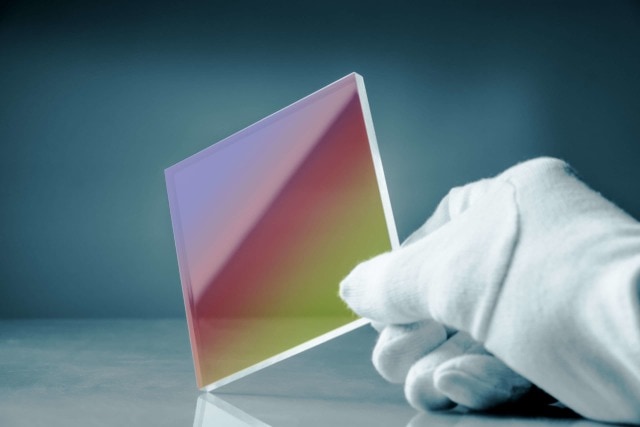
A hot mirror is a specialized optical filter designed to transmit visible light while reflecting infrared (IR) radiation, which carries heat energy. By separating light from heat, hot mirrors protect sensitive components, improve system efficiency, and enhance optical performance across industries ranging from projection and imaging to scientific instrumentation and architectural glazing.
This comprehensive guide explores:
-
What hot mirrors are
-
How they work
-
How they differ from IR-cut filters
-
How they are manufactured
-
Optical design considerations
-
Real-world applications
-
Factors that influence cost and performance
What Is a Hot Mirror?
A hot mirror is a type of dichroic interference filter engineered to:
-
Transmit visible wavelengths (approximately 400–700 nm)
-
Reflect infrared wavelengths (typically 700 nm and above)
Because infrared radiation carries thermal energy, reflecting it reduces heat buildup in optical systems.
In simple terms:
A hot mirror lets light through, but sends heat away.
The Physics Behind Hot Mirrors
Hot mirrors operate using thin-film interference.
They are constructed from multiple alternating layers of materials with different refractive indices. Each layer is precisely engineered at nanometer-scale thicknesses so that:
-
Visible wavelengths experience constructive interference → they pass through.
-
Infrared wavelengths experience destructive interference → they are reflected.
This controlled interference is what allows precise spectral separation without absorbing large amounts of energy.
Unlike absorptive filters, hot mirrors primarily reflect infrared rather than absorbing it — which improves durability and thermal stability.
Hot Mirrors vs. IR-Cut Filters
Although they may appear similar, hot mirrors and IR-cut filters serve different primary purposes.
Hot Mirrors: Thermal Management Focus
Primary goal: Reduce heat load in optical systems.
Characteristics:
-
Reflect near-infrared radiation
-
Built for high-energy environments
-
High thermal durability
-
Often optimized for angled use (e.g., 45°)
Typical environments:
-
Projectors
-
Stage lighting
-
Medical illumination systems
-
High-power optical assemblies
-
Solar control systems
IR-Cut Filters: Image Accuracy Focus
Primary goal: Improve image fidelity in digital sensors.
Digital sensors are sensitive to infrared light. Without filtering:
-
Colors appear inaccurate
-
Dark fabrics may appear reddish
-
Contrast decreases
Characteristics:
-
Precisely tuned cutoff wavelength
-
High color neutrality
-
Optimized for imaging systems
-
Usually mounted directly in front of a sensor
Typical uses:
-
DSLR cameras
-
Smartphones
-
Machine vision systems
-
Security cameras
Why Hot Mirrors Are Often Used at 45°
Many hot mirrors are designed to operate at a 45° angle of incidence.
At this angle:
-
Visible light passes forward into the system.
-
Infrared light is reflected sideways toward a heat sink or absorber.
This configuration is common in:
-
Projector optical paths
-
Scientific optical benches
-
Laser systems
However, coating performance shifts with angle. A hot mirror optimized for 0° will not perform identically at 45°, which makes optical design modeling critical.
How Hot Mirrors Are Manufactured
The manufacturing of hot mirrors requires extreme precision. Even a few nanometers of deviation can shift the cutoff wavelength.
1. Substrate Selection and Preparation
Hot mirrors begin with an optical-grade substrate such as:
-
Borosilicate glass
-
Fused silica
-
BK7 optical glass
-
Sapphire (for high-heat environments)
Preparation includes:
-
Precision polishing for optical flatness
-
Ultrasonic cleaning
-
Plasma or ion cleaning
-
Surface contamination removal
Microscopic contamination can compromise coating adhesion and spectral accuracy.
2. Thin-Film Deposition
The defining feature of a hot mirror is its multilayer coating stack.
Common materials:
Low refractive index:
-
Silicon dioxide (SiO₂)
High refractive index:
-
Titanium dioxide (TiO₂)
-
Tantalum pentoxide (Ta₂O₅)
-
Niobium pentoxide (Nb₂O₅)
Typical structure:
-
20–60+ layers
-
Individual layers: 50–250 nanometers thick
-
Total thickness: several microns
The exact number of layers depends on:
-
Desired cutoff wavelength
-
Spectral slope sharpness
-
Durability requirements
-
Angular performance
3. Deposition Technologies
Coatings are applied in high-vacuum chambers using advanced deposition methods.
Electron Beam (E-Beam) Evaporation
-
Material is heated with an electron beam
-
Vaporized material condenses onto substrate
-
Cost-effective and widely used
Ion-Assisted Deposition (IAD)
-
Adds ion bombardment during coating
-
Produces denser films
-
Improves adhesion and environmental resistance
Magnetron Sputtering
-
Plasma dislodges atoms from a target material
-
Produces highly uniform and durable coatings
-
Common in large-area architectural glass
Sputtered coatings are often preferred for applications requiring high environmental stability.
Optical Engineering Considerations
Designing a hot mirror requires advanced thin-film modeling software.
Engineers must account for:
1. Cutoff Wavelength
Typically between 650–750 nm depending on application.
2. Spectral Slope
A sharper transition between transmission and reflection requires more complex layer stacks.
3. Angle-of-Incidence Shift
As incidence angle increases:
-
The cutoff wavelength shifts shorter
-
Polarization effects become significant
Design must be optimized for actual system geometry.
4. Thermal Stability
High-intensity environments demand coatings that:
-
Resist delamination
-
Maintain spectral performance under heat cycling
-
Avoid absorption-induced stress
5. Polarization Behavior
At non-normal incidence, s- and p-polarized light behave differently. Precision systems must account for this.
Quality Control and Testing
After manufacturing, hot mirrors undergo rigorous testing:
-
Spectrophotometric transmission analysis
-
Reflectance measurement
-
Cutoff verification
-
Environmental durability testing
-
Humidity and temperature cycling
-
Adhesion testing
High-end scientific optics require extremely tight spectral tolerances.
Applications of Hot Mirrors
1. Projection Systems
Hot mirrors prevent infrared radiation from damaging:
-
LCD panels
-
DLP chips
-
Film elements
-
Optical adhesives
They extend system lifespan and improve brightness stability.
2. Medical and Scientific Instruments
Used in:
-
Microscopy
-
Endoscopy
-
Fluorescence imaging
They maintain visible light intensity while minimizing heat exposure to sensitive biological samples.
3. Laser Systems
Hot mirrors can:
-
Reflect IR pump light
-
Manage unwanted thermal radiation
-
Protect downstream optics
4. Industrial Optical Systems
In high-output illumination environments, hot mirrors:
-
Protect sensors
-
Improve measurement accuracy
-
Reduce thermal distortion
5. Architectural and Energy Applications
When applied to glass, hot mirror coatings:
-
Reflect solar infrared radiation
-
Reduce HVAC load
-
Improve energy efficiency
These are often deposited using magnetron sputtering on large glass sheets.
Dielectric vs. Metallic IR Filters
Hot mirrors are typically dielectric filters, meaning they rely on interference rather than absorption.
Metallic IR filters:
-
Often absorb infrared
-
Can heat up significantly
-
Typically have lower spectral precision
Dielectric hot mirrors:
-
Reflect IR rather than absorb it
-
Remain cooler
-
Offer sharper spectral transitions
-
Provide greater longevity
What Determines Cost?
Several factors influence manufacturing cost:
-
Number of layers
-
Spectral sharpness requirements
-
Substrate material
-
Surface quality tolerances
-
Environmental durability requirements
-
Coating method (e-beam vs sputtering)
-
Size and shape complexity
-
Volume production scale
High-performance scientific hot mirrors require significantly tighter tolerances and thus higher manufacturing costs.
The Big Picture
A hot mirror is not simply a piece of coated glass — it is a precisely engineered optical component that separates visible light from infrared energy using nanometer-scale thin-film interference.
By:
-
Reflecting heat
-
Preserving visible transmission
-
Maintaining optical clarity
-
Protecting sensitive components
Hot mirrors enable the reliable operation of projection systems, imaging devices, industrial optics, and energy-efficient architectural glass.
They are, in essence, wavelength traffic controllers, directing light where it’s needed and sending heat where it isn’t.