
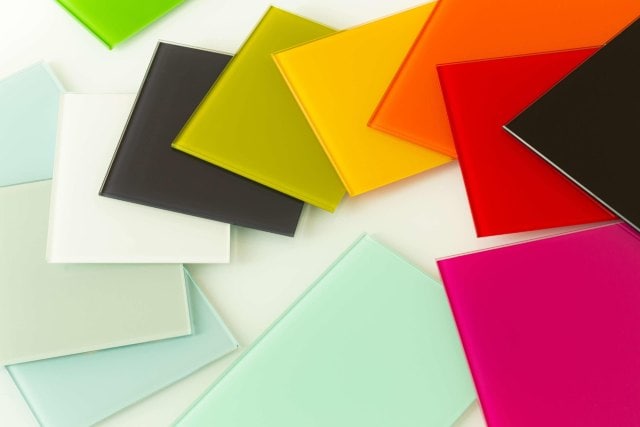
 CUSTOM OPTICAL FILTERS
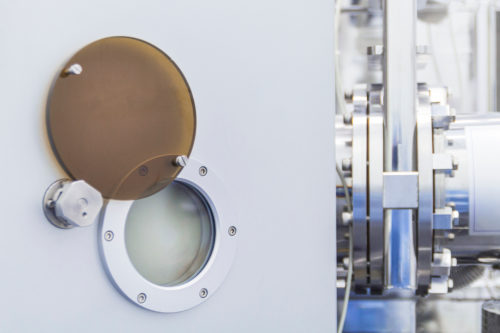 OPTICAL WINDOWS
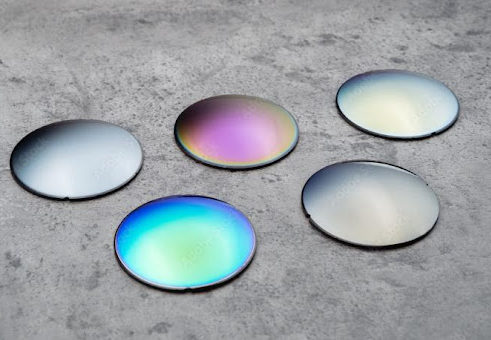 OPTICAL COATINGS
 UV OPTICS
 CYLINDRICAL OPTICS
 CUSTOM TEMPERED OPTICS
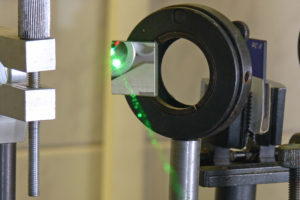 OPTICAL MIRRORS
 NEUTRAL DENSITY
 PRISMS & RETROREFLECTORS
 ASSEMBLIES
 OPTICAL LENSES
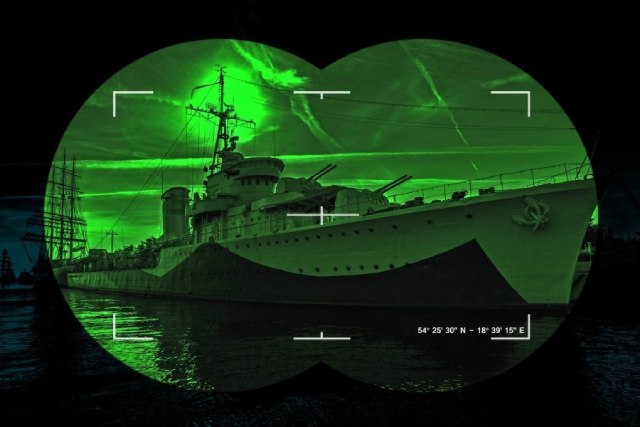 NIGHT VISION FILTERS
 ACHROMATIC LENSES
 OPTICAL BEAM SPLITTERS
How Night Vision Filters Are Made: Inside the Science and Craft of Low-Light Vision
Created at : Dec 04 2025
Night vision technology has transformed the way we see the world after dark—from military operations and aviation to wildlife observation and security systems. But behind every clear nighttime image lies an unsung hero: the night vision filter. These precisely engineered optical components are responsible for shaping light, enhancing contrast, and making visibility possible in near-total darkness. While night vision goggles and cameras often get the spotlight, the filters inside them do just as much of the heavy lifting.
So, what exactly are night vision filters, and how are they made? The answer combines physics, chemistry, optics, and some of the most advanced manufacturing techniques in modern engineering.
What Are Night Vision Filters?
Night vision filters are specialized optical elements—usually made of glass or advanced polymers—that control how light passes into a night vision device or reaches the human eye. They selectively block, transmit, or modify different wavelengths of light, particularly in the visible and infrared ranges.
Different filters serve different purposes:
- IR-pass filters allow infrared light through while blocking most visible light, supporting total-darkness visibility.
- IR-cut filters block infrared light to prevent distorted imagery and enhance daytime clarity in dual-mode cameras.
- Anti-bloom filters reduce the “halo” effect caused by bright lights overwhelming night vision sensors.
- Red and low-light filters help preserve the human eye’s natural night vision by limiting blues and harsh spectra.
- Laser protection filters shield sensitive optics from damaging high-energy laser light.
These filters appear simple from the outside, but their internal structure is a masterpiece of optical engineering.
Step 1: Selecting the Right Materials
The fabrication of a night vision filter begins long before any shaping or coating. Engineers first choose a substrate—typically optical glass or optical-grade polymer—based on the filter’s intended function.
Optical Glass
Materials like BK7, borosilicate, or fused silica are commonly used for military and high-precision applications. They offer:
- Excellent visible and infrared transmission
- Temperature and chemical stability
- High durability
Glass is ideal when clarity and performance are critical.
Optical Polymers
For applications where weight, cost, or impact resistance matter—such as goggles, face shields, or outdoor equipment—high-grade polymers like polycarbonate or acrylic are used. Polymers are easier to mold and more economical for large-scale production.
The chosen substrate must match the spectral requirements of the filter. For example, an IR-pass filter requires a base material with strong infrared transmission properties.
Step 2: Shaping and Polishing the Substrate
Once the raw material is chosen, it must be formed into a precise, optically perfect platform for coatings. This involves several stages:
Cutting
Large glass sheets or polymer blocks are cut into smaller blanks using diamond-tipped saws, laser cutters, or CNC machines. Each blank is slightly larger than the intended final size.
Grinding
The surface is ground to achieve the approximate thickness and curvature required. If the filter will be flat, thickness uniformity must be controlled to microns. If curved, grinding forms the initial lens shape.
Polishing
This is where optics manufacturing reaches its highest precision. Specialized slurries, polishing pads, and automated machines are used to achieve a surface smoothness often below 10 nanometers of roughness. Any imperfection could scatter light and compromise night vision clarity.
Edge Treatment
Edges are beveled or polished to prevent cracking or chipping—especially important for devices exposed to physical stress, such as military NVGs.
By this stage, the piece may look like a finished lens or window, but it still can’t function as a night vision filter. That performance comes from the coatings.
Step 3: Applying Thin-Film Coatings
Thin-film deposition is the heart of night vision filter fabrication. These filters work not merely because of their base material, but because they are coated with multiple nanometer-thick layers of metal oxides and other compounds that precisely control how light behaves.
To apply these coatings, the substrates are placed into a vacuum chamber where one of several deposition methods may be used:
Physical Vapor Deposition (PVD)
In this method, coating materials such as titanium dioxide or silicon dioxide are heated until they evaporate. The vapor condenses onto the substrate, forming a thin, even layer. PVD is used for many IR-pass, IR-cut, and bandpass filters.
Ion-Assisted Deposition (IAD)
High-energy ions bombard the coating as it forms, increasing density and improving adhesion. This is ideal for rugged filters used in battlefield or aviation environments.
Magnetron Sputtering
This highly controlled technique knocks atoms off a target material, allowing exceptionally uniform and durable coatings with tight optical tolerances.
Layer Stacks
A single night vision filter may contain 10 to over 200 layers, each precisely calculated to modify light through constructive and destructive interference. These layers determine exactly which wavelengths pass through and which are blocked.
For example, an 850 nm IR-pass filter used in night vision cameras must:
- Transmit nearly 100% of light at 850 nm
- Block most visible light
- Resist degradation under environmental exposure
Achieving such selectivity requires layer thickness controlled to within fractions of a nanometer.
Step 4: Protective Surface Treatments
Depending on how and where the filter will be used, additional coatings may be applied:
- Scratch-resistant coatings for rugged field use
- Anti-reflective coatings to minimize glare
- Hydrophobic and oleophobic coatings to repel water and oils
- Laser protection layers for military and laboratory environments
These coatings ensure that the optical performance remains consistent even under heavy wear.
Step 5: Testing and Quality Control
Every night vision filter undergoes rigorous inspection before shipment:
Spectrophotometry
This measures the filter’s transmission across the visible and IR spectrum, ensuring it meets exact specifications.
Interferometry
Interferometers reveal even tiny deviations in flatness or curvature, which could distort images.
Environmental Stress Testing
Filters may be exposed to:
- Temperature cycling
- Humidity
- Abrasion
- Shock and vibration
In high-stakes environments—such as combat, aviation, or medical imaging—a filter must perform flawlessly under extreme conditions.
The Hidden Craft Behind Night Vision
Although often overlooked, night vision filters are one of the most sophisticated optical components in modern technology. Their fabrication blends high-purity materials, nanoscale engineering, and precision optics manufacturing. Without them, night vision devices would suffer from glare, distortion, washed-out images, or complete failure in low-light environments.
From the careful selection of materials to the delicate dance of thin-film light manipulation, the creation of night vision filters is a remarkable example of science and craftsmanship working together—allowing us to see clearly when the world goes dark.