
Night Vision Filters: The Critical Optical Components Behind Modern Low-Light Imaging Systems
Created at : Jun 09 2026
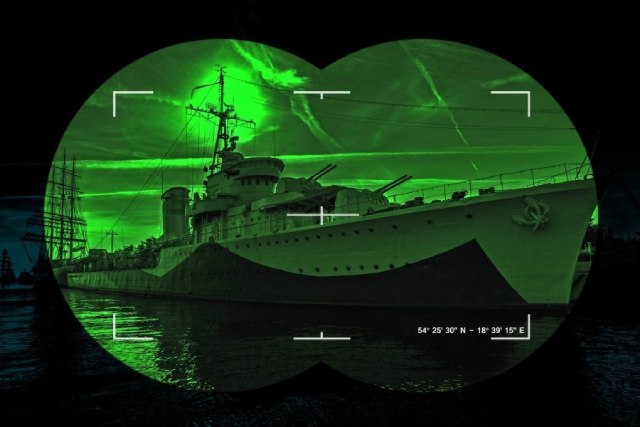
Whether supporting military operations in complete darkness, enabling border surveillance, enhancing aviation safety, or improving scientific imaging, night vision technology has become an essential tool across countless industries. While much attention is given to image intensifier tubes, infrared sensors, and advanced camera systems, one of the most important components often goes unnoticed: the night vision filter.
These highly engineered optical components determine which wavelengths reach a sensor, which wavelengths are blocked, and how effectively a night vision system performs in demanding environments. In many cases, the difference between a successful imaging system and one that struggles in the field comes down to the design and quality of its optical filters.
For organizations developing advanced imaging equipment, working directly with a custom night vision filter manufacturer can provide significant advantages in performance, durability, and system integration. Understanding how these filters work and why custom manufacturing matters can help engineers and procurement teams make better decisions when designing next-generation optical systems.
What Are Night Vision Filters?
Night vision filters are specialized optical components designed to selectively transmit, reflect, or block specific wavelengths of light. Their purpose is to optimize the performance of night vision devices by controlling the spectral content reaching an image intensifier, camera sensor, or optical assembly.
Most modern night vision systems operate by amplifying available light from sources such as moonlight, starlight, or artificial infrared illumination. Because these systems are highly sensitive to certain wavelength ranges, carefully engineered filters are required to maximize signal quality while minimizing unwanted light.
Night vision filters can be found in:
- Night vision goggles
- Weapon sights
- Thermal imaging systems
- Surveillance cameras
- Aerospace instrumentation
- Scientific imaging equipment
- Medical imaging systems
- Autonomous vehicle sensors
- Drone and UAV payloads
Without properly designed filters, imaging systems may suffer from reduced contrast, excessive noise, sensor saturation, or even permanent damage from high-energy light sources.
How Night Vision Systems Use Light
To understand the role of night vision filters, it helps to understand how night vision systems operate.
Image intensifier tubes commonly used in military and commercial night vision equipment are highly sensitive to visible red light and near-infrared wavelengths. These systems collect available photons and amplify them to create a visible image.
Many systems are designed to operate within a wavelength range extending from approximately 600 nanometers to 900 nanometers. Because sensors respond differently to various wavelengths, controlling the incoming light becomes critical.
This is where optical filters become indispensable.
By selectively transmitting useful wavelengths and blocking unwanted light, filters improve image quality, increase contrast, reduce interference, and protect sensitive imaging components.
Types of Night Vision Filters
Night vision systems utilize several different filter technologies depending on the application.
Near-Infrared Pass Filters
Near-infrared pass filters transmit infrared wavelengths while blocking visible light.
These filters allow imaging systems to operate with covert infrared illumination that remains invisible to the human eye.
Applications include:
- Security surveillance
- Military reconnaissance
- Wildlife observation
- Industrial inspection
- Machine vision systems
Common transmission wavelengths include:
- 715 nm
- 780 nm
- 850 nm
- 940 nm
By allowing only infrared light to reach the sensor, these filters improve image contrast and reduce visible-light interference.
Visible Blocking Filters
Visible blocking filters are designed to appear nearly opaque to the human eye while allowing infrared light to pass through.
These filters are commonly used when operators require covert illumination and observation capabilities.
Benefits include:
- Enhanced concealment
- Improved signal-to-noise ratio
- Better image clarity
- Reduced detection risk
Laser Protection Filters
As laser technologies become increasingly common on modern battlefields and industrial systems, laser protection filters have become essential.
These filters are engineered to block specific laser wavelengths that could damage image intensifiers or overwhelm imaging sensors.
Common blocked wavelengths include:
- 532 nm green lasers
- 1064 nm Nd:YAG lasers
- 1550 nm rangefinder lasers
Laser protection filters help preserve sensor integrity and maintain operational readiness in high-threat environments.
Bandpass Filters
Bandpass filters transmit only a narrow range of wavelengths while rejecting everything outside that range.
These filters are often used in:
- Scientific imaging
- Remote sensing
- Target acquisition systems
- Machine vision applications
The result is enhanced contrast and improved image quality under challenging conditions.
Neutral Density Filters
Not all night vision systems operate in complete darkness.
When ambient light levels increase, image intensifiers and sensors can become saturated.
Neutral density filters reduce overall light transmission without significantly altering color balance or spectral response.
Applications include:
- Urban surveillance
- Dawn and dusk operations
- Hybrid day-night systems
How Night Vision Filters Are Manufactured
Modern night vision filters are sophisticated optical components manufactured through a combination of precision substrate fabrication and advanced thin-film coating technologies.
The process begins with carefully selected optical materials.
Common substrate materials include:
- Fused silica
- BK7 optical glass
- Sapphire
- Specialty infrared glasses
- Germanium for longer infrared wavelengths
Once the substrate is fabricated and polished, specialized thin-film coatings are applied.
Thin-Film Coating Technology
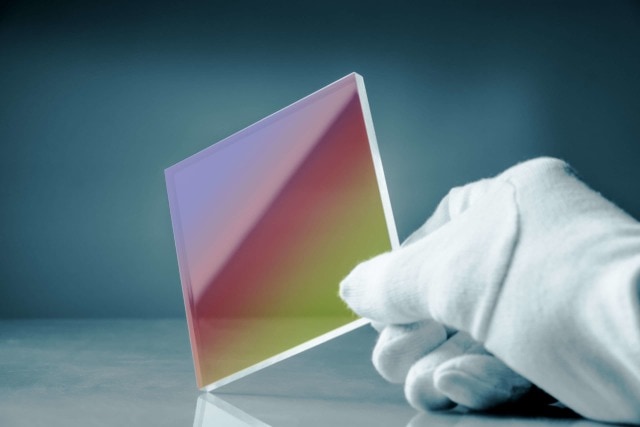
The optical properties of a night vision filter are primarily created through multilayer thin-film coatings.
These coatings consist of alternating layers of high- and low-refractive-index materials deposited at nanometer-scale thicknesses.
The exact layer structure determines:
- Transmission characteristics
- Reflection characteristics
- Blocking performance
- Environmental durability
Common deposition methods include:
Electron Beam Evaporation
A versatile coating process used for many optical filter applications.
Ion-Assisted Deposition (IAD)
Provides improved coating density and environmental stability.
Ion Beam Sputtering (IBS)
Offers exceptional precision and spectral control for demanding applications.
Magnetron Sputtering
Produces highly durable coatings with excellent repeatability.
The choice of deposition process depends on the application's performance requirements and environmental demands.
Why Custom Night Vision Filters Matter
Many imaging systems require performance characteristics that simply cannot be achieved using standard catalog components.
Off-the-shelf filters are designed to satisfy broad market needs, but advanced imaging systems often demand highly specific optical performance.
Custom filters can be engineered to optimize:
- Wavelength transmission
- Laser protection
- Sensor compatibility
- Environmental durability
- Spectral blocking requirements
- Angular performance
By tailoring the filter to the application rather than adapting the application to the filter, system designers can achieve superior performance.
Who Needs Custom Night Vision Filters?
A wide range of industries rely on custom optical filter manufacturers.
Defense Contractors
Defense remains one of the largest markets for custom night vision filters.
Applications include:
- Night vision goggles
- Vehicle vision systems
- Weapon optics
- Surveillance platforms
- Targeting systems
- Reconnaissance equipment
Major defense programs often require highly specialized filter designs capable of meeting stringent military specifications.
Aerospace Manufacturers
Aircraft operating with Night Vision Imaging Systems (NVIS) require specialized optical filters integrated into cockpit displays and instrumentation.
These filters help ensure compatibility between cockpit lighting and pilot night vision equipment.
Security and Surveillance Companies
Modern surveillance systems frequently rely on infrared imaging to monitor facilities, borders, and critical infrastructure.
Custom filters help improve image quality while enabling covert observation capabilities.
Drone and UAV Manufacturers
Unmanned aerial systems increasingly depend on advanced optical payloads capable of operating in low-light conditions.
Custom night vision filters can improve sensor performance while reducing unwanted spectral interference.
Scientific Instrument Developers
Research organizations often require extremely precise wavelength control.
Custom filters support applications such as:
- Spectroscopy
- Astronomy
- Fluorescence imaging
- Remote sensing
- Laboratory instrumentation
Medical Device Manufacturers
Near-infrared imaging plays a growing role in modern healthcare technologies.
Applications include:
- Surgical imaging
- Diagnostic equipment
- Fluorescence-guided procedures
- Vein visualization systems
The Advantages of Working Directly with a Night Vision Filter Manufacturer
While distributors and catalog suppliers may provide standard optical components, working directly with a manufacturer offers significant advantages.
Access to Optical Engineering Expertise
One of the greatest benefits is direct collaboration with optical engineers and coating specialists.
Manufacturers can assist with:
- Filter design optimization
- Spectral modeling
- Material selection
- Cost-performance tradeoffs
- Manufacturing feasibility analysis
This collaborative approach often results in a better final product.
Better System Integration
Night vision filters rarely function as standalone components.
Manufacturers can optimize filters for:
- Specific camera sensors
- Image intensifiers
- Optical assemblies
- Laser systems
- Illumination sources
This helps maximize overall system performance.
Enhanced Environmental Durability
Military, aerospace, and industrial systems frequently operate under harsh conditions.
Custom manufacturers can provide coatings designed to withstand:
- Abrasion
- Salt fog
- Humidity
- Thermal cycling
- Shock and vibration
- UV exposure
Faster Development Cycles
Direct communication between engineering teams reduces delays and simplifies design revisions.
Manufacturers can often provide:
- Rapid prototypes
- Performance testing
- Iterative design support
- Production scalability
Improved Quality Control
Industries such as defense, aerospace, and medical imaging require rigorous documentation and traceability.
Manufacturers can provide:
- Spectral test reports
- Material certifications
- Environmental qualification data
- Manufacturing traceability
These capabilities are often essential for regulated industries.
Choosing the Right Manufacturing Partner
Selecting a night vision filter supplier involves more than evaluating transmission curves and pricing.
Organizations should look for manufacturers that offer:
- Optical design expertise
- Precision fabrication capabilities
- Advanced coating technologies
- Prototype-to-production support
- Rigorous quality systems
- Industry-specific experience
A qualified manufacturing partner can contribute significantly to the success of an imaging program.
Custom Night Vision Filters from Sterling Precision Optics
At Sterling Precision Optics, we understand that every imaging system presents unique optical challenges. Our team works closely with customers across defense, aerospace, industrial, scientific, and medical markets to develop custom optical filter solutions that meet exact performance requirements.
Our capabilities include:
- Custom night vision filter development
- Precision optical fabrication
- Advanced thin-film coating design
- Infrared and near-infrared filter manufacturing
- Laser protection filters
- Bandpass and multi-band filters
- Prototype and production manufacturing
- Optical assembly integration
Whether you are developing a next-generation surveillance platform, military imaging system, scientific instrument, or specialized infrared sensor, Sterling Precision Optics can help transform your performance requirements into precision-engineered optical solutions.
As night vision technologies continue to evolve, the demand for custom optical filters will only increase. Working with an experienced manufacturer ensures that your imaging system receives the optical performance, durability, and reliability required to succeed in even the most demanding environments.
CUSTOM OPTICAL FILTERS
OPTICAL WINDOWS
OPTICAL COATINGS
UV OPTICS
CYLINDRICAL OPTICS
CUSTOM TEMPERED OPTICS
OPTICAL MIRRORS
NEUTRAL DENSITY
PRISMS & RETROREFLECTORS
ASSEMBLIES
OPTICAL LENSES
NIGHT VISION FILTERS
ACHROMATIC LENSES
OPTICAL BEAM SPLITTERS